OrbitalHub

The place where space exploration, science, and engineering meet

Domain is for sale. $50,000,000.00 USD. Direct any inquiries to contact@orbitalhub.com.

Archive for 2017

September 19, 2017

Dragon Departs Space Station

Posted by


NASA dixit:

“The SpaceX/Dragon cargo craft departed the International Space Station September 17, one month after delivering more than three tons of supplies and scientific experiments for the station’s residents. Expedition 53 Flight Engineer Paolo Nespoli of the European Space Agency and station Commander Randy Bresnik used the Canadarm2 robotic arm to release Dragon after it was detached from the Earth-facing port of the Harmony module. Dragon was scheduled to move to a safe distance away from the station for its engine to conduct a deorbit burn, enabling it to drop out of orbit for a parachute-assisted splashdown in the Pacific southwest of Long Beach, California. Dragon was launched on a SpaceX Falcon 9 rocket from the Kennedy Space Center on August 14, arriving at the orbital outpost August 16.”

Video credit: NASA


  • Facebook
  • Google
  • Slashdot
  • Reddit
  • Live
  • TwitThis
September 18, 2017

Soyuz MS-06 Launch and Docking

Posted by


NASA dixit:

“After launching in their Soyuz MS-06 spacecraft from the Baikonur Cosmodrome in Kazakhstan, Expedition 53-54 Soyuz Commander Alexander Misurkin of Roscosmos and flight engineers Mark Vande Hei and Joe Acaba of NASA arrived at the International Space Station. The trio docked their Soyuz to the Poisk module on the Russian segment of the complex, to complete their six-hour journey to the station.”

Video credit: Roscosmos / NASA


  • Facebook
  • Google
  • Slashdot
  • Reddit
  • Live
  • TwitThis
September 15, 2017

Cassini: The Wonder of Saturn

Posted by


NASA dixit:

“NASA’s Cassini spacecraft has explored the Saturn system since 2004, re-writing our understanding of the giant planet, its rings, moons and magnetosphere. For 13 years the spacecraft’s incredible, truly otherworldly images have revealed the wonder of Saturn in surprising, often awe-inspiring ways. Cassini is planetary exploration at its finest, proving that to truly reveal the grandeur of a world, there is no substitute for actually going there.”

Video credit: NASA Jet Propulsion Laboratory


  • Facebook
  • Google
  • Slashdot
  • Reddit
  • Live
  • TwitThis
September 15, 2017

Tethys in Sunlight

Posted by


NASA dixit:

“June 15, 2013. Tethys, like many moons in the solar system, keeps one face pointed towards the planet around which it orbits. Tethys’ anti-Saturn face is seen here, fully illuminated, basking in sunlight. On the right side of the moon in this image is the huge crater Odysseus. The Odysseus crater is 280 miles (450 kilometers) across while Tethys is 660 miles (1,062 kilometers) across.

This view looks toward the anti-Saturn side of Tethys. North on Tethys is up and rotated 33 degrees to the right. The image was taken in visible light with the Cassini spacecraft narrow-angle camera. The view was acquired at a distance of approximately 503,000 miles (809,000 kilometers) from Tethys. Image scale is 3 miles (5 kilometers) per pixel.”

“After almost 20 years in space, NASA’s Cassini spacecraft begins the final chapter of its remarkable story of exploration: its Grand Finale. Between April and September 2017, Cassini will undertake a daring set of orbits that is, in many ways, like a whole new mission. Following a final close flyby of Saturn’s moon Titan, Cassini will leap over the planet’s icy rings and begin a series of 22 weekly dives between the planet and the rings.

No other mission has ever explored this unique region. What we learn from these final orbits will help to improve our understanding of how giant planets – and planetary systems everywhere – form and evolve.

On the final orbit, Cassini will plunge into Saturn’s atmosphere, sending back new and unique science to the very end. After losing contact with Earth, the spacecraft will burn up like a meteor, becoming part of the planet itself.

Cassini’s Grand Finale is about so much more than the spacecraft’s final dive into Saturn. That dramatic event is the capstone of six months of daring exploration and scientific discovery. And those six months are the thrilling final chapter in a historic 20-year journey.”

Image credit: NASA

 

  • Facebook
  • Google
  • Slashdot
  • Reddit
  • Live
  • TwitThis
September 15, 2017

Cassini’s Grand Finale

Posted by


NASA dixit:

“The final chapter in a remarkable mission of exploration and discovery, Cassini’s Grand Finale is in many ways like a brand new mission. Twenty-two times, NASA’s Cassini spacecraft will dive through the unexplored space between Saturn and its rings. What we learn from these ultra-close passes over the planet could be some of the most exciting revelations ever returned by the long-lived spacecraft. This animated video tells the story of Cassini’s final, daring assignment and looks back at what the mission has accomplished.”

Video credit: NASA Jet Propulsion Laboratory


  • Facebook
  • Google
  • Slashdot
  • Reddit
  • Live
  • TwitThis
September 14, 2017

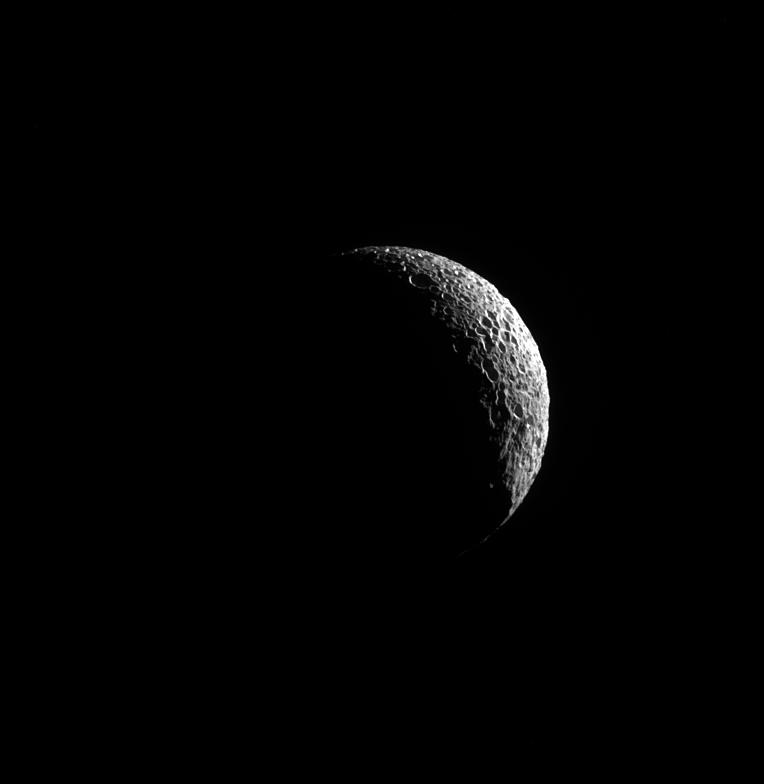
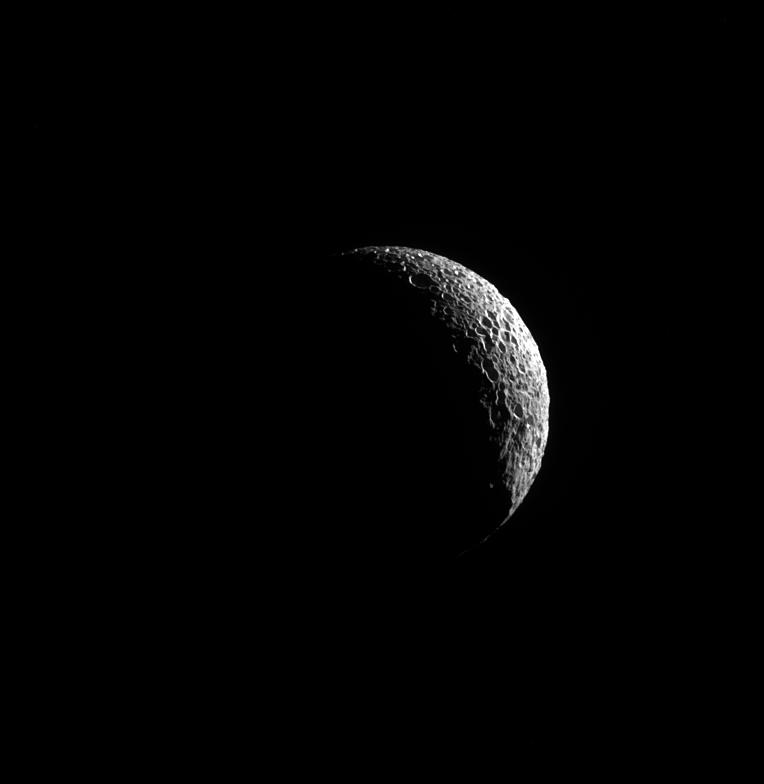
Crescent Mimas

Posted by


NASA dixit:

“May 20, 2013. A thin sliver of Mimas is illuminated, the long shadows showing off its many craters, indicators of the moon’s violent history. The most famous evidence of a collision on Mimas (246 miles, or 396 kilometers across) is the crater Herschel that gives Mimas its Death Star-like appearance. This view looks toward the anti-Saturn hemisphere of Mimas. North on Mimas is up and rotated 40 degrees to the right. The image was taken in visible light with the Cassini spacecraft narrow-angle camera.

The view was acquired at a distance of approximately 100,000 miles (200,000 kilometers) from Mimas and at a Sun-Mimas-spacecraft, or phase, angle of 130 degrees. Image scale is 4,000 feet (1 kilometer) per pixel.”

“After almost 20 years in space, NASA’s Cassini spacecraft begins the final chapter of its remarkable story of exploration: its Grand Finale. Between April and September 2017, Cassini will undertake a daring set of orbits that is, in many ways, like a whole new mission. Following a final close flyby of Saturn’s moon Titan, Cassini will leap over the planet’s icy rings and begin a series of 22 weekly dives between the planet and the rings.

No other mission has ever explored this unique region. What we learn from these final orbits will help to improve our understanding of how giant planets – and planetary systems everywhere – form and evolve.

On the final orbit, Cassini will plunge into Saturn’s atmosphere, sending back new and unique science to the very end. After losing contact with Earth, the spacecraft will burn up like a meteor, becoming part of the planet itself.

Cassini’s Grand Finale is about so much more than the spacecraft’s final dive into Saturn. That dramatic event is the capstone of six months of daring exploration and scientific discovery. And those six months are the thrilling final chapter in a historic 20-year journey.”

Image credit: NASA


  • Facebook
  • Google
  • Slashdot
  • Reddit
  • Live
  • TwitThis