OrbitalHub

The place where space exploration, science, and engineering meet

Domain is for sale. $50,000,000.00 USD. Direct any inquiries to contact@orbitalhub.com.

Archive for 2017

October 10, 2017

Fly Over Ceres with the Dawn Spacecraft

Posted by


NASA dixit:

“Occator Crater on Ceres is home to the brightest area on the entire dwarf planet. At 57 miles (92 kilometers) wide and 2.5 miles (4 kilometers) deep, Occator displays evidence of recent geologic activity. NASA’s Dawn mission found that the bright spots may have been produced by upwelling of salt-rich liquids after the impact that formed the crater. Pan and zoom as you fly over the crater with Dawn in this 360-degree animation made with observations from the spacecraft.”

Video credit: NASA


  • Facebook
  • Google
  • Slashdot
  • Reddit
  • Live
  • TwitThis
October 9, 2017

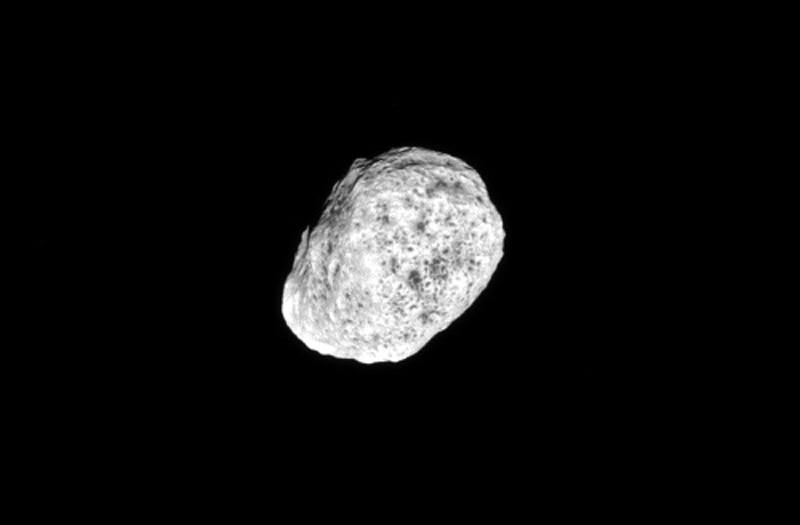
Hyperion

Posted by


NASA dixit:

“August 22, 2016. The moon Hyperion tumbles as it orbits Saturn. Hyperion’s (168 miles or 270 kilometers across) spin axis has a chaotic orientation in time, meaning that it is essentially impossible to predict how the moon will be spinning in the future. So far, scientists only know of a few bodies with such chaotic spins. The image was taken in green light with the Cassini spacecraft narrow-angle camera.

The view was acquired at a distance of approximately 203,000 miles (326,000 kilometers) from Hyperion and at a Sun-Hyperion-spacecraft, or phase, angle of 10 degrees. Image scale is 1 mile (2 kilometers) per pixel.”

Image credit: NASA/JPL-Caltech/Space Science Institute


  • Facebook
  • Google
  • Slashdot
  • Reddit
  • Live
  • TwitThis
October 9, 2017

The A68 story

Posted by


ESA dixit:

“As a result of a deep cracking cutting across the Larsen C ice shelf, a huge iceberg was spawned on 12 July 2017. Europe’s Copernicus Sentinel-1 mission was used to monitor the rift’s progress, a network of fractures in the ice and the calving event. Since then, the large tabular iceberg – known as A68 – has drifted about 5 km from the ice shelf. Images from Sentinel-1 also show that a cluster of more than 11 smaller icebergs have now also formed, the largest of which is over 13 km long. These ‘bergy bits’ have broken off both the giant iceberg and the remaining ice shelf.

Credits: contains modified Copernicus Sentinel data (2017), reproduced from Hogg and Gudmundsson (2017)”

Video credit: ESA


  • Facebook
  • Google
  • Slashdot
  • Reddit
  • Live
  • TwitThis
October 8, 2017

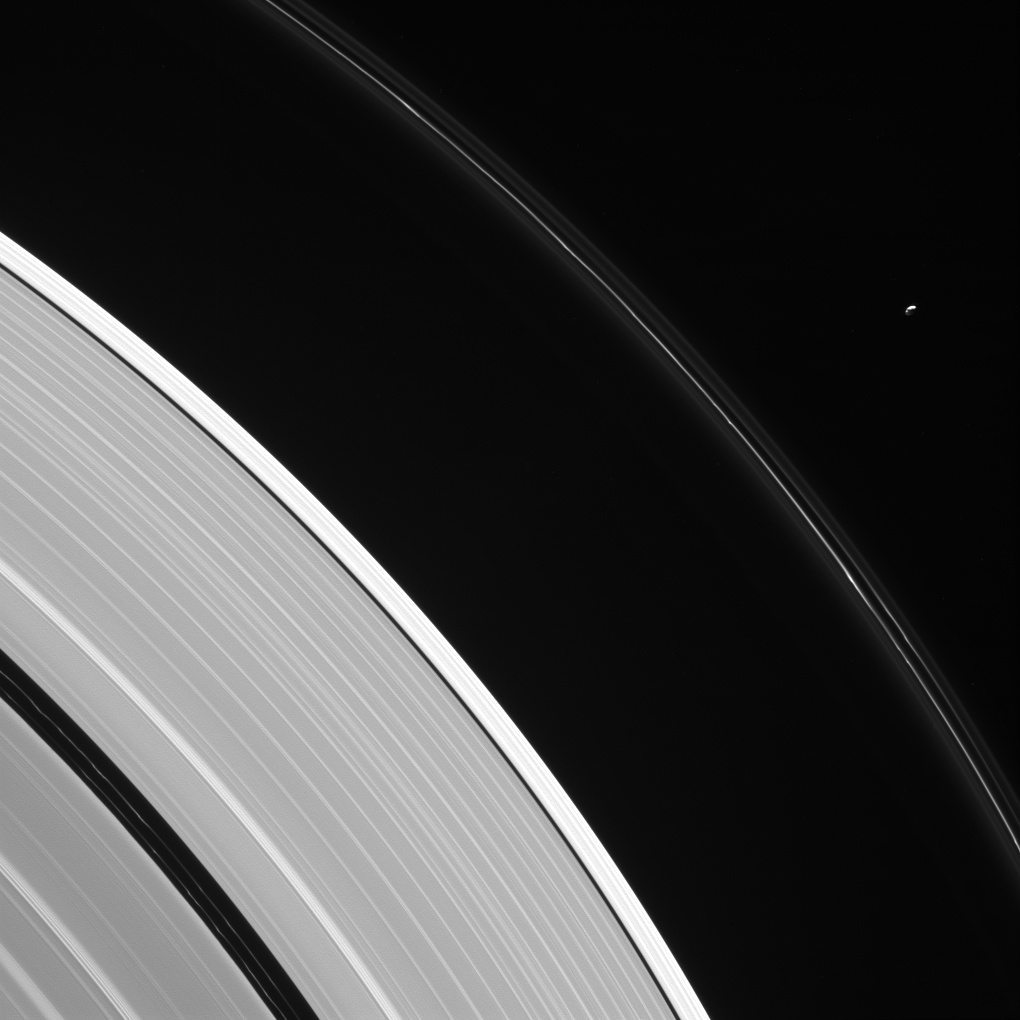
Lonely Moon

Posted by


NASA dixit:

“August 12, 2016. Pandora is seen here, in isolation beside Saturn’s kinked and constantly changing F ring. Pandora (near upper right) is 50 miles (81 kilometers) wide. The moon has an elongated, potato-like shape. Two faint ringlets are visible within the Encke Gap, near lower left. The gap is about 202 miles (325 kilometers) wide. The much narrower Keeler Gap, which lies outside the Encke Gap, is maintained by the diminutive moon Daphnis (not seen here).

This view looks toward the sunlit side of the rings from about 23 degrees above the ring plane. The image was taken in visible light with the Cassini spacecraft narrow-angle camera. The view was acquired at a distance of approximately 907,000 miles (1.46 million kilometers) from Saturn and at a Sun-Saturn-spacecraft, or phase, angle of 113 degrees. Image scale is 6 miles (9 kilometers) per pixel.”

Image credit: NASA/JPL-Caltech/Space Science Institute


  • Facebook
  • Google
  • Slashdot
  • Reddit
  • Live
  • TwitThis
October 8, 2017

Mapping the Seafloor

Posted by


ESA dixit:

“Having detailed knowledge of the shape of the seafloor is essential for generating nautical charts for navigation. It is also needed for exploration, fishing, coastal management and for understanding ocean currents that transport heat, nutrients and pollutants. While mapping the seafloor was traditionally carried out using sonar on ships, optical satellite data provide global, high-resolution maps that show ridges, valleys and sediments.”

Video credit: ESA


  • Facebook
  • Google
  • Slashdot
  • Reddit
  • Live
  • TwitThis
October 7, 2017

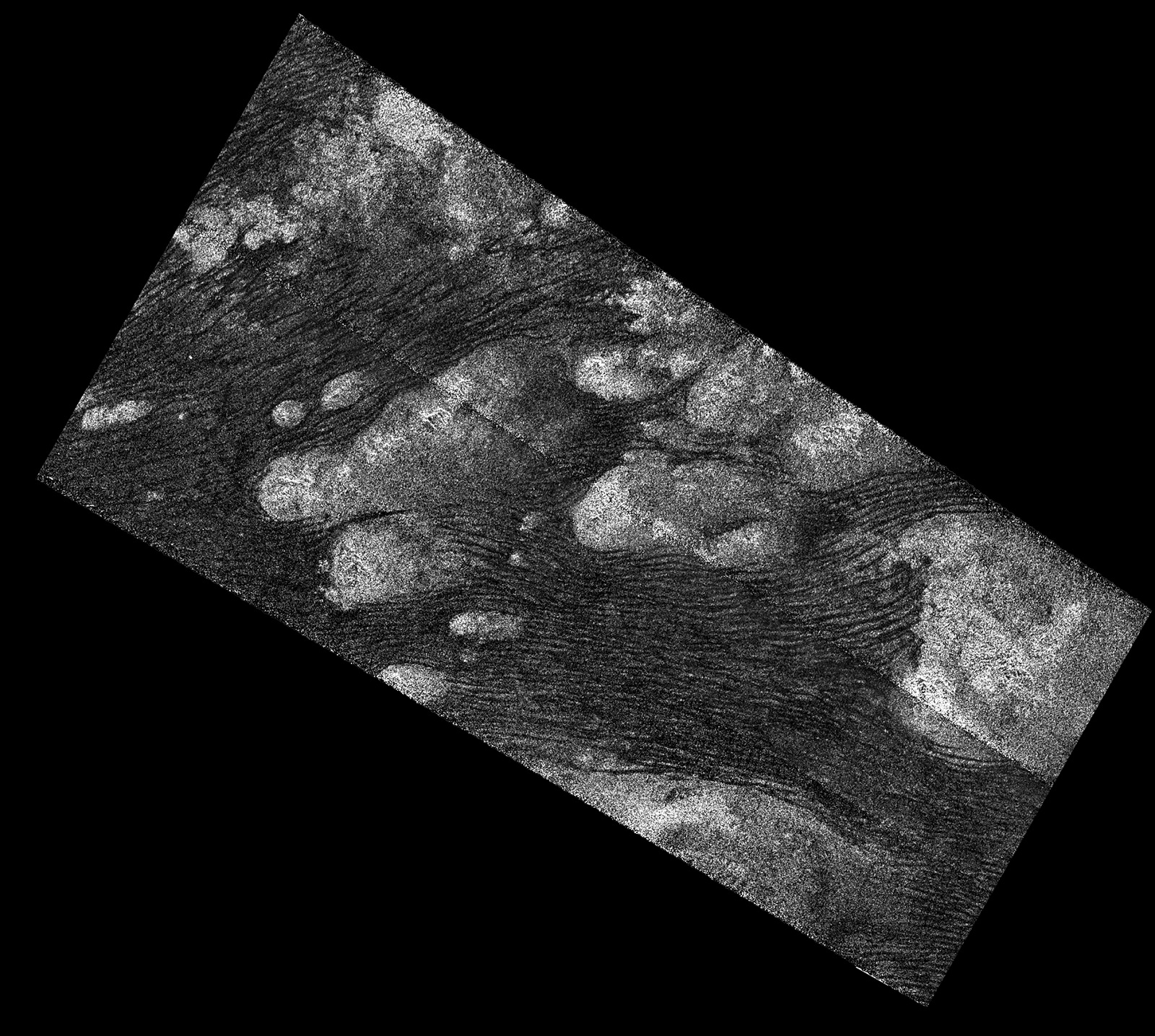
Flowing Dunes of Shangri-La

Posted by


NASA dixit:

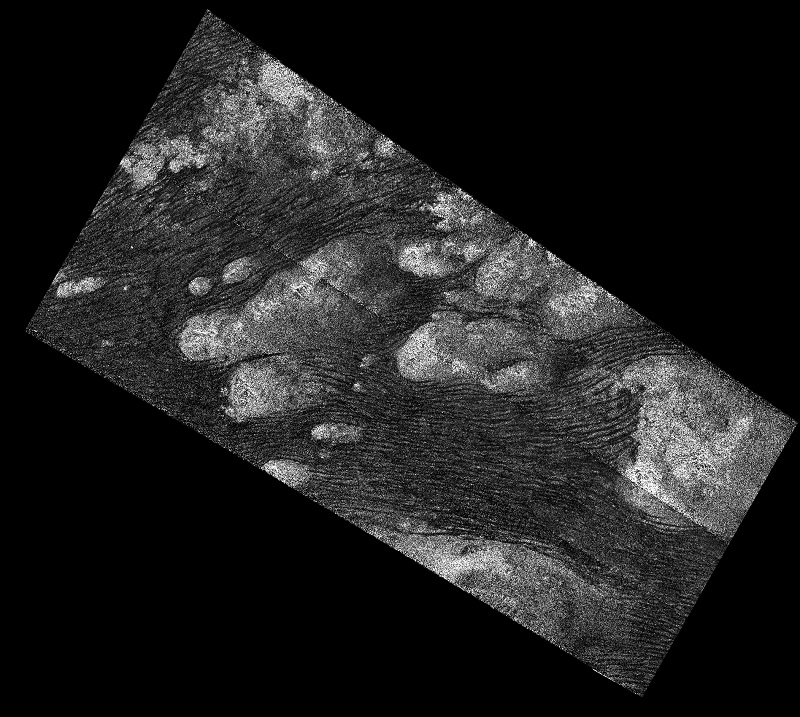
“July 25, 2016. In the Shangri-La Sand Sea on Titan is shown in this image from the Synthetic Aperture radar (SAR) on NASA’s Cassini spacecraft. Hundreds of sand dunes are visible as dark lines snaking across the surface. These dunes display patterns of undulation and divergence around elevated mountains (which appear bright to the radar), thereby showing the direction of wind and sand transport on the surface. Sands being carried from left to right (west to east) cannot surmount the tallest obstacles; instead, they are directed through chutes and canyons between the tall features, evident in thin, blade-like, isolated dunes between bright some features. Once sands have passed around the obstacles, they resume their downwind course, at first collecting into small, patchy dunes and then organizing into larger, more pervasive linear forms, before being halted once again by obstacles.

These patterns reveal the effects not only of wind, perhaps even modern winds if the dunes are actively moving today, but also the effects of underlying bedrock and surrounding topography. Dunes across the solar system aid in our understanding of underlying topography, winds and climate, past and present. Similar patterns can be seen in dunes of the Great Sandy Desert in Australia, where dunes undulate broadly across the uneven terrain and are halted at the margins of sand-trapping lakes. The dune orientations correlate generally with the direction of current trade winds, and reveal that winds must have been similar back when the dunes formed, during the Pleistocene glacial and interglacial periods.

North on Titan is up in the image. Radar illuminates the scene from upper right at a 27-degree incidence angle. The image was obtained during the mission’s 122nd targeted Titan encounter.”

Image credit: NASA/JPL-Caltech/Space Science Institute

 

  • Facebook
  • Google
  • Slashdot
  • Reddit
  • Live
  • TwitThis