Soyuz TMA-17 landed on June 2, 2010, in Kazakhstan. On board were cosmonaut Oleg Kotov, NASA\’s Timothy Creamer, and JAXA\’s Soichi Noguchi.
Read more about the International Space Station…



Soyuz TMA-17 landed on June 2, 2010, in Kazakhstan. On board were cosmonaut Oleg Kotov, NASA\’s Timothy Creamer, and JAXA\’s Soichi Noguchi.
Read more about the International Space Station…


 |
| Credits: ESA – S. Corvaja |
After a successful simulated Mars mission that lasted for only 150 days, the Mars 500 experiment will go to the next level: the 520-day mission. The hatch of the facility hosted at the Russian Institute for Biomedical Problems in Moscow will be sealed again tomorrow, on June 3, 2010.
There are six crewmembers selected plus a Russian backup: Diego Urbina, Romain Charles, Sukhrob Kamolov, Alexey Sitev, Alexandr Smoleevskiy, Mikhail Sinelnikov, and Wang Yue. The crew will live and work for 520 days inside the sealed facility in the same way astronauts live and work on the International Space Station (minus the zero-g environment, of course).
You can find more information about the Mars 500 project on the dedicated page on ESA’s website.
These images were captured by the MODIS instrument on board the Terra and Aqua satellites. The massive oil spill is fuelled by a sea floor oil gusher that started with a well blowout on April 20, 2010. This spill is now considered the largest offshore spill in the US history.
Read more about the Deepwater Horizon oil spill…
Space Shuttle Atlantis landed on runway 33 at Kennedy Space Center on May 26, 2010. The STS-132 mission lasted 12 days, during which the crew and the space shuttle traveled over 4.8 million miles.
 |
| Credits: KuoShen Choong |
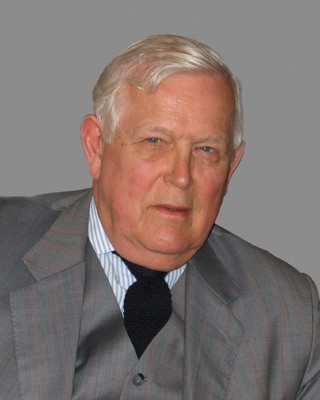
This year, the Kalman filter, an essential part of the development of space technology, has its 50th anniversary. To quote from the announcement of the 2008 Charles Stark Draper Prize, the Kalman filter is an “optimal digital technique that is pervasively used to control a vast array of consumer, health, commercial, and defense products.”
In order to understand what a Kalman filter is, we should remember that a water filter is used to remove impurities from water by passing them through strata of sand, charcoal, etc. The modern usage of the term filter though involves more abstract entities than fluids with suspended impurities. In the context of electrical engineering, we can think of a filter in the sense of signal processing.
More generally, and I promise I will try not to make it more complicated than this, a filter is used to estimate the state of a system (whatever we want the system to be) using measurements that are affected by errors. Are you aware of any measurements not affected by errors? Exactly! This is why filters are very useful.
The Kalman filter is able to produce estimates of the true values of the measurements by computing weighted averages of the predicted values and the measurements themselves. Believe it or not, the estimated values produced by the filter tend to be closer to the true values than the original measurements. Many extensions and generalizations of the Kalman filter have been developed. One of them is the unscented Kalman filter (can anyone guess why this variation of the filter is called unscented?).
The Kalman filter is named after Rudolf E. Kalman. Kalman first published his ideas on filtering in two papers in 1960 and 1961: Kalman, R.E., A New Approach to Linear Filtering and Prediction Problems, Journal of Basic Engineering, Trans. ASME, Series D, Vol. 82, No. 1, 1960, pp. 35-45, and Kalman, R.E., and Bucy, R.S., New Results in Linear Filtering and Prediction Theory, Journal of Basic Engineering, Trans. ASME, Series D, Vol. 83, No. 3, 1961, pp. 95-108. A downloadable version of the first paper can be found on Professor Greg Welch’s web page dedicated to The Seminal Kalman Filter Paper at The University of North Carolina at Chapel Hill. If anyone has a downloadable version of the second paper, please let me know. I would be happy to link to it.
As Kalman’s ideas on filtering were met with skepticism in the electrical engineering and systems engineering communities, he published his research results in mechanical engineering. One of the scientists who supported his ideas was Stanley F. Schmidt of NASA’s Ames Research Center. Kalman filters were employed by the control systems used in the Apollo program, and later in the Space Shuttle program.
 |
| Credits: Ryan K. Morris/National Science & Technology Medals Foundation |
Rudolf Emil Kalman was born in Budapest, Hungary, on May 19, 1930. His father was an electrical engineer. Having decided to follow in his father’s footsteps, he emigrated to the United States and obtained a Bachelor Degree in 1953 and a Master’s Degree in 1954 from the Massachusetts Institute of Technology, and the D.Sci. Degree in 1957 from Columbia University, under the direction of Professor J.R. Ragazzini.
From 1957 to 1958 Kalman worked as a staff engineer at the IBM Research Laboratory in Poughkeepsie, New York. He worked as a research mathematician at the Research Institute for Advanced Study in Baltimore from 1958 until 1964. During this period of time, he made his innovative contributions to modern control theory. He became a professor at Stanford University, where he lectured between 1964 and 1971, and later a graduate research professor in the departments of mathematics, electrical engineering, and industrial and systems engineering at the University of Florida at Gainesville. While at the University of Florida, he established the Center for Mathematical Systems Theory (CMST). Since 1973, he also held the chair for Mathematical Systems Theory at the Swiss Federal Institute of Technology in Zurich.
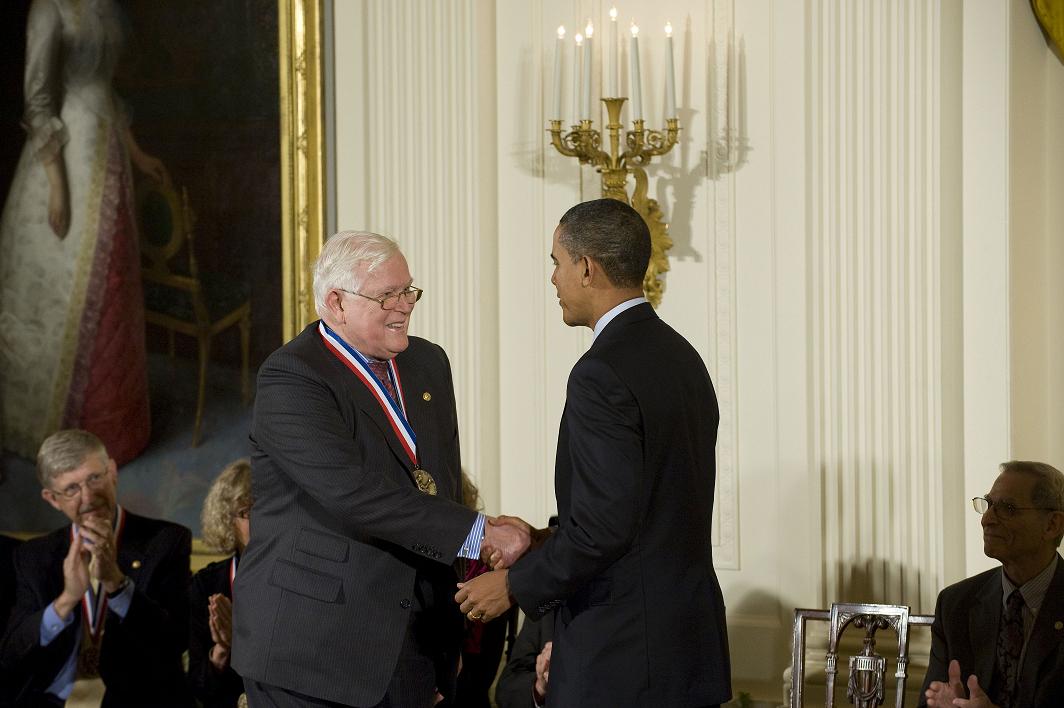
Rudolf Kalman is the recipient of numerous awards. He was awarded the IEEE Medal of Honor in 1974, the IEEE Centennial Medal in 1984, the Inamori Foundation’s Kyoto Prize in High Technology in 1985, the Steele Prize of the American Mathematical Society in 1987, the Richard E. Bellman Control Heritage Award in 1997, and the Charles Stark Draper Prize of the National Academy of Engineering in 2008. Rudolf Kalman is also a foreign member of the Hungarian, French, and Russian Academies of Science and he is the holder of many honorary doctorates.
Rudolf Kalman had several Ph.D. students at each of the institutions where he was a faculty member. Among them, Edward W. Kamen (Julian T. Hightower Professor Emeritus at the Georgia Institute of Technology), Yves Rouchaleau (faculty member at the Ecole des Mines de Paris), Patrick Dewilde (member of the Institute for Advanced Study, TU München), and Yutaka Yamamoto (Professor in the Department of Applied Analysis and Complex Dynamical Systems at the Graduate School of Informatics of Kyoto University). The April 2010 issue of the IEEE Control Systems Magazine contains a series of essays written by the above mentioned.
A very good source of information about the Kalman filter is a website maintained by Greg Welch and Gary Bishop, faculty members of the Department of Computer Science at the University of North Carolina at Chapel Hill.
On May 21, 2010, an Ariane 5 launch vehicle placed two communication satellites into geostationary transfer orbit: ASTRA 3B, a commercial communication satellite for the SES ASTRA operator, and COMSATBw-2, a military communication satellite for the German Ministry of Defense. This was the first flight of Ariane 5 in 2010.













 Subscribe to blog posts using RSS