Images taken in ultraviolet show huge spirals. What we see are particles spinning along arcs of magnetic field lines.
Credit: NASA SDO



Images taken in ultraviolet show huge spirals. What we see are particles spinning along arcs of magnetic field lines.
Credit: NASA SDO


The movie shows the MSL\’s heat shield hitting the martian surface and raising a cloud of dust.
Credit: JPL
The video starts with a computer simulation from NASA\’s Eyes on the Solar System program and uses images from MSL\’s Mars Descent Imager.
Credit: NASA/JPL-Caltech/MSSS
Â
Â
BepiColombo\’s structural and thermal model undergoing testing at ESTEC, ESA\’s space research and technology centre in Noordwijk, the Netherlands. From top to bottom are the sunshield, which conceals the Mercury Magnetospheric Orbiter, with the Mercury Planetary Orbiter below. Underneath is the Mercury Transfer Module, which will deliver the stack of two scientific satellites into orbit around the planet. The stack is roughly six metres high. During the 2.5 minute vibration test, the spacecraft was subjected to frequencies from 3 Hz to 100 Hz, mimicking conditions it will experience when it lifts off on an Ariane 5 launch vehicle in 2015.
Credit: ESA
The LES/TDS launch performed by Copenhagen Suborbitals on August 12, 2012.
Credit: Copenhagen Suborbitals
Read more about Copenhagen Suborbitals…
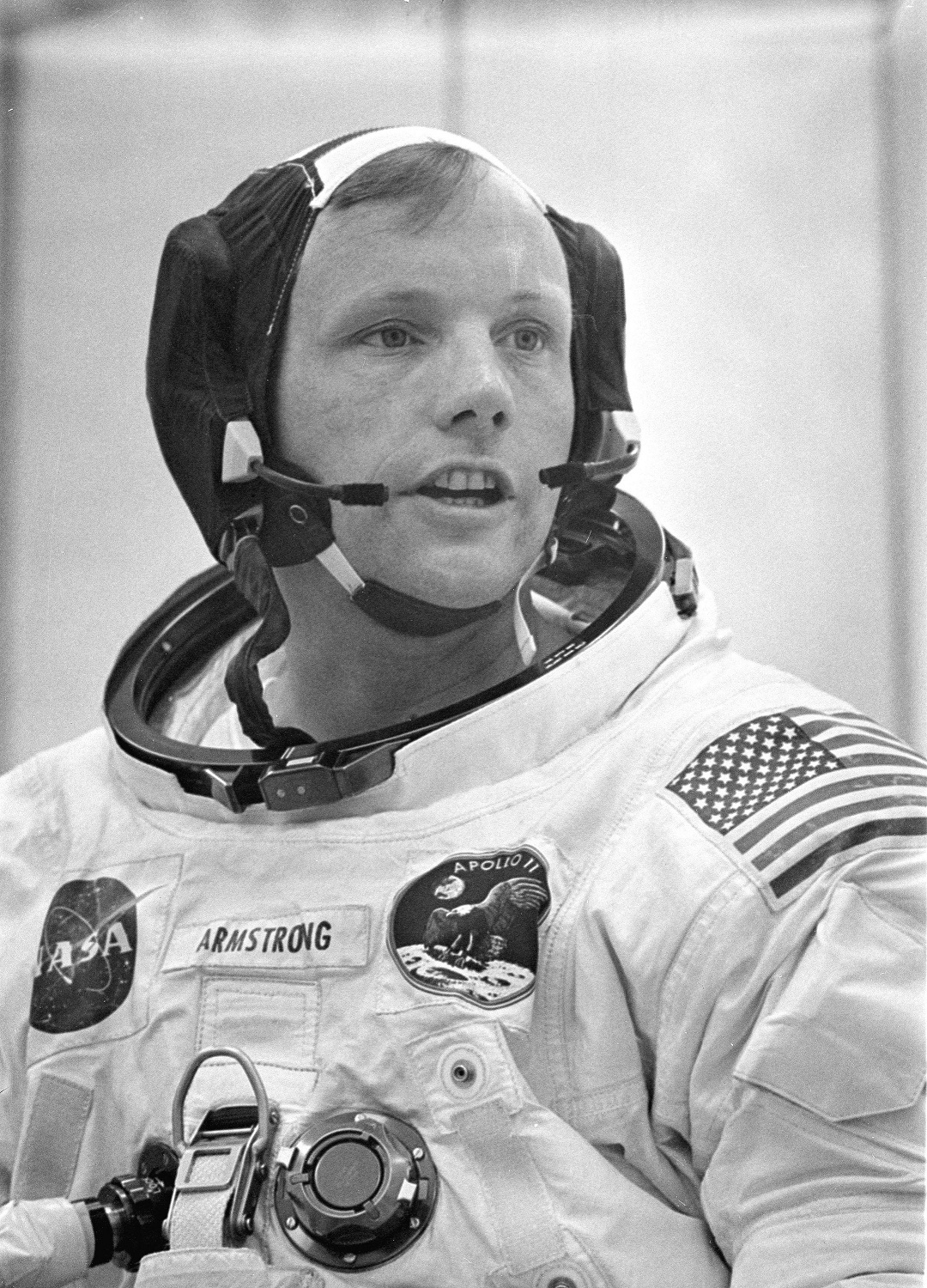
Neil Armstrong, the first man to walk on the moon during the 1969 Apollo 11 mission, has died, following complications resulting from cardiovascular procedures. He was 82.
Armstrong\’s words “That is one small step for (a) man, one giant leap for mankind,” spoken on July 20, 1969, as he became the first person ever to step onto another planetary body, instantly became a part of history.
Those few words from the Sea of Tranquillity were the climactic fulfillment of the efforts and hopes of millions of people and the expenditure of billions of dollars. A plaque on one of the lander\’s legs that concluded “We came in peace for all mankind,” further emphasized that Armstrong and fellow astronaut Edwin “Buzz” Aldrin were there as representatives of all humans.
Apollo 11 lunar module pilot and fellow moonwalker Buzz Aldrin on Armstrong\’s passing: “I am very saddened to learn of the passing of Neil Armstrong today. Neil and I trained together as technical partners but were also good friends who will always be connected through our participation in the Apollo 11 mission. Whenever I look at the moon it reminds me of the moment over four decades ago when I realized that even though we were farther away from earth than two humans had ever been, we were not alone.”
Apollo 11 command module pilot Michael Collins said simply, “He was the best, and I will miss him terribly.”
“The passing of Neil Armstrong has shocked all of us at the Johnson Space Center,” said Center Director Michael Coats. The whole world knew Neil as the first man to step foot on the Moon, but to us he was a co-worker, a friend, and an outstanding spokesman for the Human Space Program. His quiet confidence and ability to perform under pressure set an example for all subsequent astronauts. Our role model will be missed.”
“Neil Armstrong was a very personal inspiration to all of us within the astronaut office,” said Bob Behnken, Chief of NASA\’s Astronaut Office. “His historic step onto the Moon’s surface was the foundation for many of our personal dreams to become astronauts. The only thing that outshone his accomplishments was his humility about those accomplishments. We will miss him as a friend, mentor, explorer and ambassador for the American spirit of ingenuity.”
Source: NASA













 Subscribe to blog posts using RSS