OrbitalHub

The place where space exploration, science, and engineering meet

Domain is for sale. $50,000,000.00 USD. Direct any inquiries to contact@orbitalhub.com.

Archive for the Astronomy category

April 18, 2019

Double Asteroid

Posted by


Three of the world’s largest radio telescopes team up to show a rare double asteroid. 2017 YE5 is only the fourth binary near-Earth asteroid ever observed in which the two bodies are roughly the same size, and not touching. This video shows radar images of the pair gathered by Goldstone Solar System Radar, Arecibo Observatory and Green Bank Observatory.

Video Credit: NASA


  • Facebook
  • Google
  • Slashdot
  • Reddit
  • Live
  • TwitThis


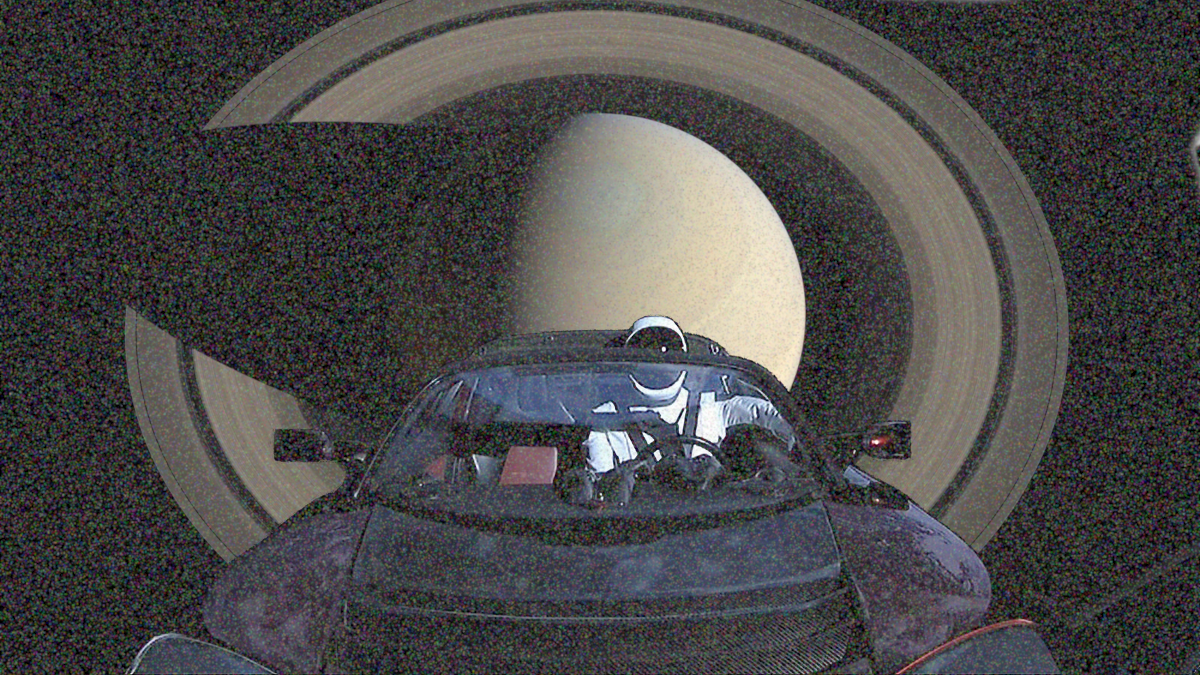
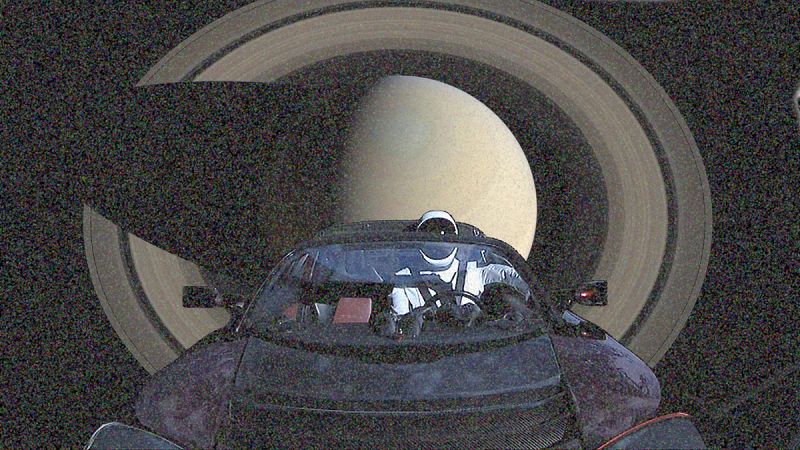
An amateur radio-astronomer from Northern Ontario received this image from Starman and the Falcon Heavy test payload.

There are rumors that SpaceX is developing a revolutionary propulsion system. Clearly, the Falcon Heavy test launch was an opportunity to test this new drive. The payload with Elon Musk’s roadster was the perfect decoy for a mission like this.

In terms of drive performance, the roadster was able to reach the Saturn system in a little more than a year. It took Cassini seven years to reach Saturn. When Earth and Saturn are closest, the distance between them is approximately 1.2 billion kilometers. We can conclude that the roadster drive must be a remarkable piece of engineering. It could be the scientific breakthrough that will allow humans to colonize the Solar System.

Image credit: Zgabeartza Iftode

 

  • Facebook
  • Google
  • Slashdot
  • Reddit
  • Live
  • TwitThis
March 21, 2019

Venus Dust Ring

Posted by


NASA dicit:

This visualization displays a simulation of the dust ring at Venus’s orbit around the Sun. Scientists hypothesize a group of never-before-detected asteroids orbiting the Sun with Venus are responsible for supplying Venus’s dust ring.

Video Credit: NASA’s Scientific Visualization Studio/Tom Bridgman


  • Facebook
  • Google
  • Slashdot
  • Reddit
  • Live
  • TwitThis
March 20, 2019

SDO Catches Lunar Transit

Posted by


NASA dicit:

On the evening of March 6, 2019, the Moon started to transit the Sun, then doubled back and retraced its steps in the other direction — at least, that’s what it looked like from the perspective of NASA’s Solar Dynamics Observatory, or SDO, in orbit around Earth. The relative speeds and positions of the Moon, the Sun and NASA’s Solar Dynamics Observatory resulted in this unusual lunar transit where the Moon appears to pause and reverse course.

Video Credit: NASA


  • Facebook
  • Google
  • Slashdot
  • Reddit
  • Live
  • TwitThis
February 28, 2019

Sounds of Saturn and Enceladus

Posted by


NASA dicit:

“New research from the up-close Grand Finale orbits of NASA’s Cassini mission shows a surprisingly powerful interaction of plasma waves moving from Saturn to its moon Enceladus. Researchers converted the recording of plasma waves into a “whooshing” audio file that we can hear — in the same way a radio translates electromagnetic waves into music. Much like air or water, plasma (the fourth state of matter) generates waves to carry energy. The recording was captured by the Radio Plasma Wave Science (RPWS) instrument September 2, 2017, two weeks before Cassini was deliberately plunged into the atmosphere of Saturn.”

Video Credit: NASA/JPL-Caltech/University of Iowa


  • Facebook
  • Google
  • Slashdot
  • Reddit
  • Live
  • TwitThis
February 27, 2019

2014 MU69 Flyby

Posted by


NASA dicit:

“New Horizons scientists created this movie from 14 different images taken by the New Horizons Long Range Reconnaissance Imager (LORRI) shortly before the spacecraft flew past the Kuiper Belt object nicknamed Ultima Thule (officially named 2014 MU69) on January 1, 2019. The central frame of this sequence was taken on January 1 at 5:26:54 UT (12:26 a.m. EST), when New Horizons was 4,117 miles (6,640 kilometers) from Ultima Thule, some 4.1 billion miles (6.6 billion kilometers) from Earth. Ultima Thule nearly completely fills the LORRI image and is perfectly captured in the frames, an astounding technical feat given the uncertain location of Ultima Thule and the New Horizons spacecraft flying past it at over 32,000 miles per hour.”

Video Credit: NASA


  • Facebook
  • Google
  • Slashdot
  • Reddit
  • Live
  • TwitThis