OrbitalHub

The place where space exploration, science, and engineering meet

Domain is for sale. $50,000,000.00 USD. Direct any inquiries to contact@orbitalhub.com.

Archive for the Robotic Exploration category

November 20, 2010

Aerial Regional-scale Environmental Survey

Posted by


Credits: NASA


ARES (or the Aerial Regional-scale Environment Survey) is an autonomous powered airplane. ARES will bridge the gap between remote sensing and surface exploration on Mars.


This new class of science will allow magnetic surveys with an improved resolution, geologic diversity coverage, and in-situ atmospheric science.


ARES method of deployment is unique because the robotic aircraft has to travel to Mars folded inside a protective shell. After the atmospheric entry and the parachute deployment, the heat shield that protects the aircraft during entry is released. Once the heat shield is out of the way, the folded aircraft leaves the protective shell. The unfolded tail will stabilize the tumbling aircraft. Finally, the wings will unfold and the aircraft will pull up from the dive.


It is needless to say that reliability is essential. All the mechanical systems of the aircraft that are involved in this maneuver must perform without any flaws, and that has to happen after spending six to eight months in vacuum at (more than) freezing temperatures. It is hard to imagine that ARES would be able to fly with a folded wing.


Credits: NASA


The ARES design is the result of five years of extensive analysis and testing. Testing has included wind tunnel tests, ejection tests, and flight tests. In order to simulate the Mars environment, the flight tests had to be performed at certain Mach and Reynolds numbers. A 50% scale prototype was released from a high-altitude research balloon. The robust design that resulted will handle the uncertainties in the Mars environment.


ARES could be selected as the next Mars Scout Mission. For more details about ARES you can visit NASA’s website. ARES Principal Investigator, Dr. Joel S. Levine, presented ARES at a TEDxNASA event. If you want to build your own paper-made scale model of the ARES Mars Airplane, you can find the model here.


  • Facebook
  • Google
  • Slashdot
  • Reddit
  • Live
  • TwitThis
October 29, 2010

Aerobots for Planetary Exploration

Posted by


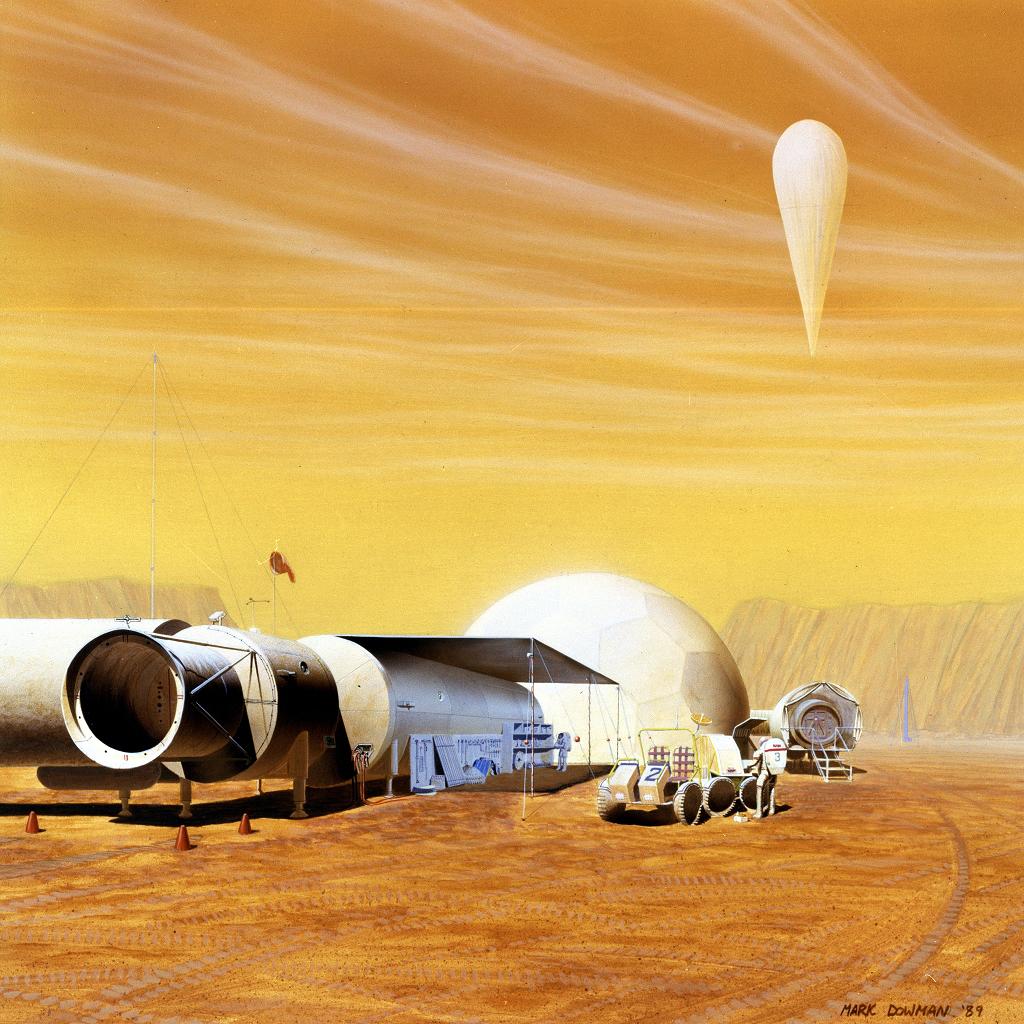
Credits: Mark Dowman


Airships are making a big comeback now as the energy consumption for all modes of transportation is being re-analyzed. Missions with special requirements like surveillance and reconnaissance missions and transportation of heavy payloads to remote outposts are the main driver for the reinvention of the airship.


But Earth is not the only place where airships can be deployed. There are a number of destinations in the solar system that would make a perfect environment for deployment and operation of airships, like Mars, Venus, and Titan – Saturn’s largest moon.


The presence of an atmosphere makes possible the use of vehicles that can fly within atmosphere for planetary exploration. Also, planetary exploration with low-powered vehicles like airships really makes sense considering the fact that energy is always at a premium.


So far, the only extraterrestrial deployment of an airship was performed during the Vega mission to Venus, in 1984. Two balloons were released and they floated 54 km above the planet’s surface for nearly two days.


Lighter-Than-Air (LTA) AERial ROBOTS (AEROBOTS) would present some advantages over their Heavier-Than-Air (HTA) siblings and the traditional planetary scouts, the exploration rovers: they would have long-duration mission and long-distance capabilities, they would not have to deal with obstacle avoidance problems, and they have low-power consumption. However, the environment in which the airship will operate will impose some restrictions on the capabilities of the airship (consider things like atmospheric composition and density, temperature, and the amount of solar radiation available). More on the planetary environments in the solar system and airship evaluations for each one of them can be found here.


NASA has funded a number of projects for solar system exploration that make use of aerobots. The Jet Propulsion Laboratory’s Planetary Aerobot Program is developing balloons to support scientific payloads in the atmosphere of other planets in our solar system. You can find more details about JPL’s Planetary Aerobot Program here.


  • Facebook
  • Google
  • Slashdot
  • Reddit
  • Live
  • TwitThis
July 9, 2010

Rosetta and 21 Lutetia

Posted by


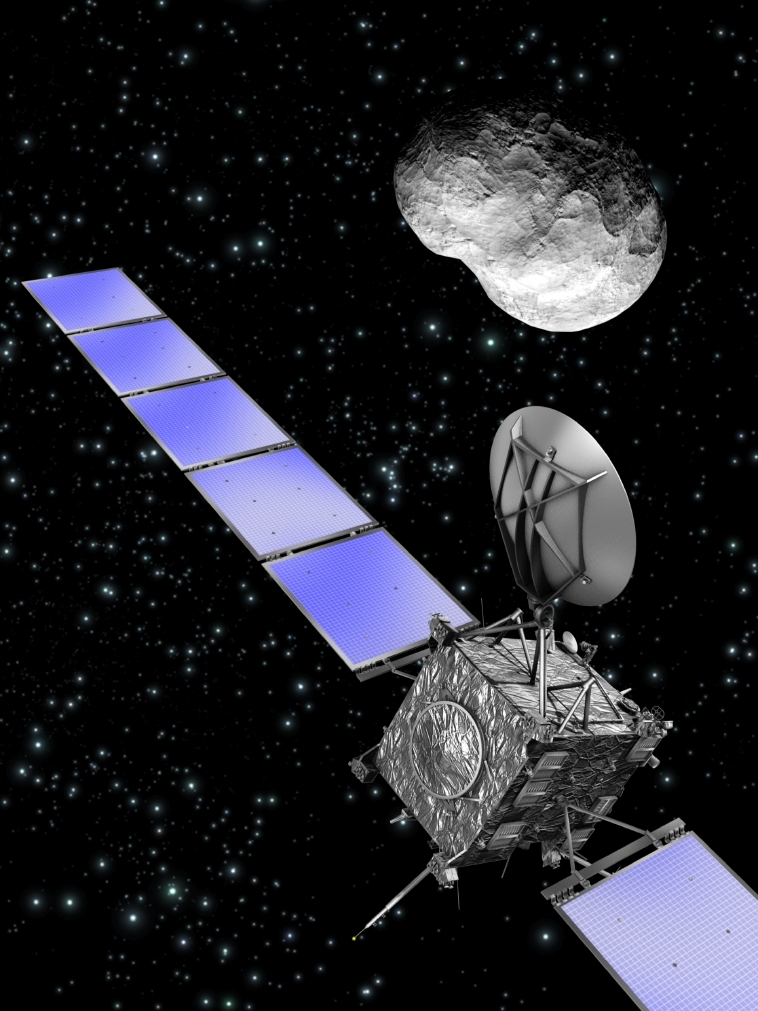
Credits: ESA


On July 10, 2010, the European comet chaser Rosetta will perform the second asteroid flyby of its mission. The first flyby was performed on September 6, 2008, when Rosetta had a close encounter with the asteroid 2867 Steins. Rosetta will skim by the asteroid 21 Lutetia at approximately 3,000 km. The speed of the spacecraft relative to the asteroid will be around 54,000 km/h.


The asteroid Lutetia was discovered on November 15, 1852, by the German astronomer Hermann Goldschmidt. Besides the characteristics of its trajectory, few things are known about the asteroid. From the preliminary observations made by Rosetta, scientists were able to estimate the diameter of the asteroid to 134 km, but the actual shape and composition still remain to be determined.


During the flyby, the spacecraft will operate in a special Asteroid Flyby Mode. This will allow the spacecraft to control its attitude and keep the asteroid in the field of view of the imaging instruments carried onboard.


Rosetta has to follow a complicated trajectory that includes three Earth gravity assists and one at Mars, in order to accelerate to the speed needed for reaching its final destination. The last gravity assist maneuver occurred on November 13, 2009, when Rosetta swung by Earth.


After 6 years into the mission, the systems on the spacecraft are doing very well, and the best is yet to come: the rendezvous with the comet 67/P Churyumov-Gerasimenko in 2014. Rosetta will deploy a small lander on the surface of the comet, and it will continue to fly alongside the nucleus of the comet for more than one year.


OrbitalHub will re-cast the live webstream from ESOC, ESA’s European Space Operations Center, in Darmstadt, Germany. The program starts July 10, 2010, at 20:00 GMT. The closest approach will occur at 20:10:07 GMT. Come back and watch the events unfold!


  • Facebook
  • Google
  • Slashdot
  • Reddit
  • Live
  • TwitThis
April 2, 2010

IKAROS

Posted by


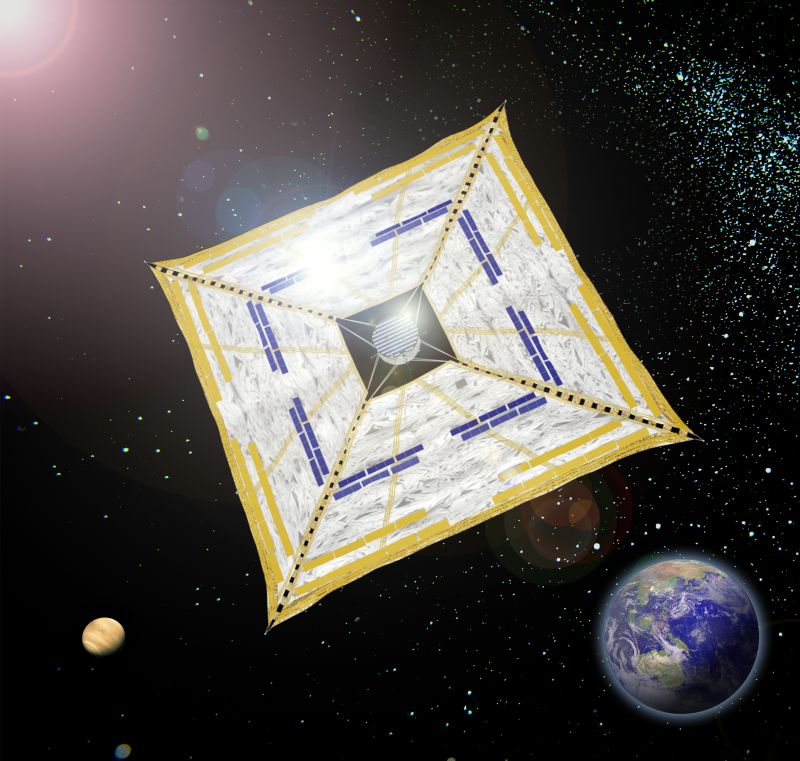
Credits: JAXA


While solar sail projects around the world are starving for funding, in Japan things are different. The Japan Aerospace Exploration Agency (JAXA) is developing a small solar power sail demonstrator, IKAROS (Interplanetary Kite-craft Accelerated by Radiation Of the Sun). IKAROS is equipped with a square sail made of polyimide resin and 0.0075 mm thick. Long-term plans of the agency include a medium-sized solar power sail with a diameter of 50 m and ion-propulsion engines that will explore the Trojan asteroids and Jupiter.


The solar power sail is a slightly different concept than the traditional solar sail. In addition to the solar sail, the solar power sail has a thin film of solar cells deployed on the membrane. The solar cells generate electricity that can be used to power ion-propulsion engines onboard the spacecraft. Fuel-effective mission profiles are made possible by such hybrids.


IKAROS will be launched from the Tanegashima Space Center on top of a H-II launch vehicle. It will share the ride with the Venus Climate Orbiter “AKATSUKI”.


JAXA is committed to leading the research and the development of solar sails:
“JAXA will lead future solar system exploration using solar power sails. Our missions will lead to lower cost in the solar cells market, whose growth is a key factor for global warming prevention. Those low-cost solar cells are also the foundation of future solar power satellite systems.”


Centauri Dreams presents the comments of Osamu Mori, the project leader for the sail mission, on the solar-powered attitude control system of the spacecraft and the deployment method of the sail. You can find more information about IKAROS on JAXA’s web site.


  • Facebook
  • Google
  • Slashdot
  • Reddit
  • Live
  • TwitThis
November 14, 2009

Rosetta Performed Final Earth Swingby

Posted by


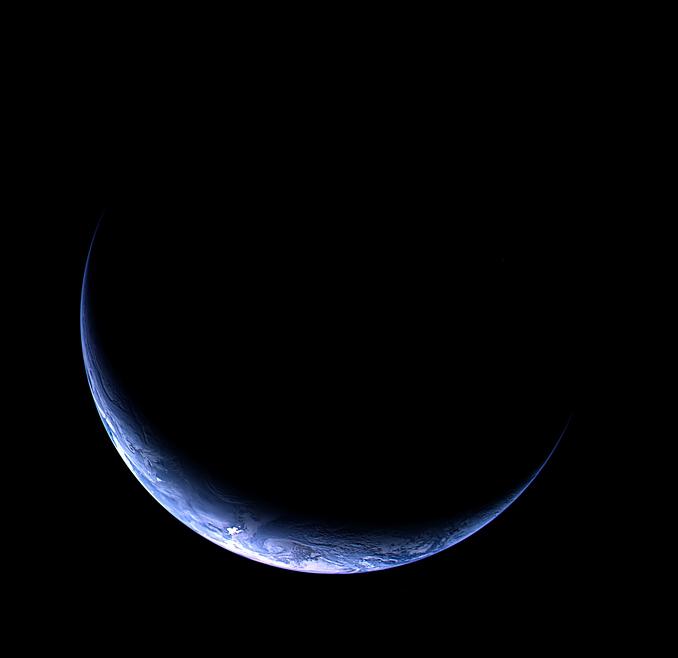
Credits: ESA OSIRIS Team MPS/UPD/LAM/IAA/RSSD/INTA/UPM/DASP/IDA


On November 13, 2009, at 8:45 AM CET, ESA’s comet chaser Rosetta swung by Earth. Rosetta passed just South of the Indonesian island of Java at an altitude of 2481 km. Its speed relative to Earth was 13.34 km/s. The maneuver provided a boost of 3.6 km/s.


Rosetta’s OSIRIS (Optical Spectroscopic and Infrared Remote Imaging System) narrow-angle camera was used to image the Earth once every hour for 24 hours.


Rosetta will meet asteroid 21 Lutetia in 2010. The final destination of Rosetta is the comet 67P/Churyumov-Gerasimenko, which the spacecraft will reach in 2014. Rosetta will deploy a lander to the surface of the comet, and will also orbit the nucleus of the comet and fly alongside as it heads towards the inner Solar System. Most of the time, the probe will hibernate with the majority of its systems shut down in order to optimize the power consumption.


You can find more information about Rosetta’s swing by on ESA’s Rosetta Blog website.


  • Facebook
  • Google
  • Slashdot
  • Reddit
  • Live
  • TwitThis
November 3, 2009

SMOS And PROBA-2 Launch

Posted by


Credits: ESA


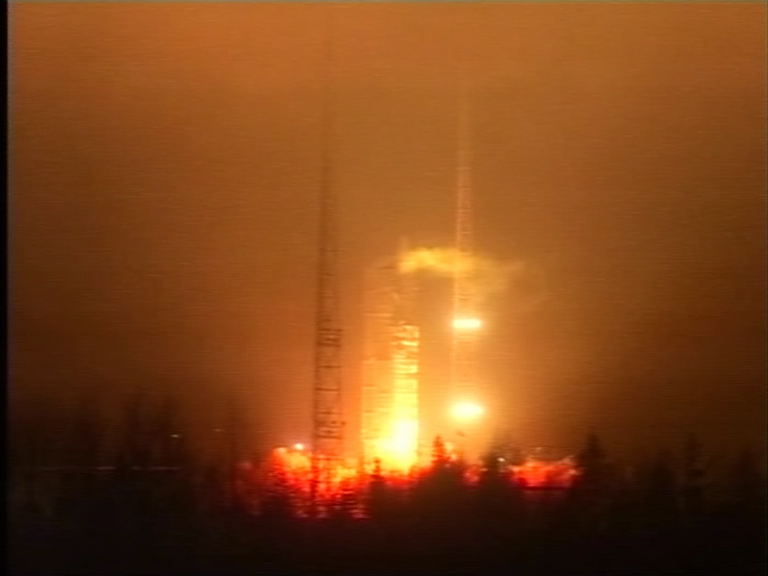
A Rockot launch vehicle lifted off from the Plesetsk Cosmodrome in northern Russia on November 2, 2009, at 02:50 CET. Rockot carried to orbit two new ESA satellites: SMOS and PROBA-2.


SMOS was released by the Breeze-KM upper stage some 70 minutes after the launch. After arriving at a lower orbit, the upper stage released Proba-2 around three hours after the launch.


The Soil Moisture and Ocean Salinity (SMOS) mission, which is the second Earth Explorer Opportunity mission to be developed as part of ESA’s Living Planet Program, will provide global maps of moisture over the Earth’s landmasses and salinity over the oceans. These observations will improve our understanding of hydrology and ocean circulation patterns.


PROBA-2 is part of an ESA program called In-Orbit Technology Demonstration Program, which is dedicated to the demonstration of innovative technologies. The PROBA-2 payload consists of scientific instruments that will make observations of the Sun in the ultraviolet portion of the spectrum and will measure certain properties of the plasma surrounding the spacecraft.


  • Facebook
  • Google
  • Slashdot
  • Reddit
  • Live
  • TwitThis