OrbitalHub

The place where space exploration, science, and engineering meet

Domain is for sale. $50,000,000.00 USD. Direct any inquiries to contact@orbitalhub.com.


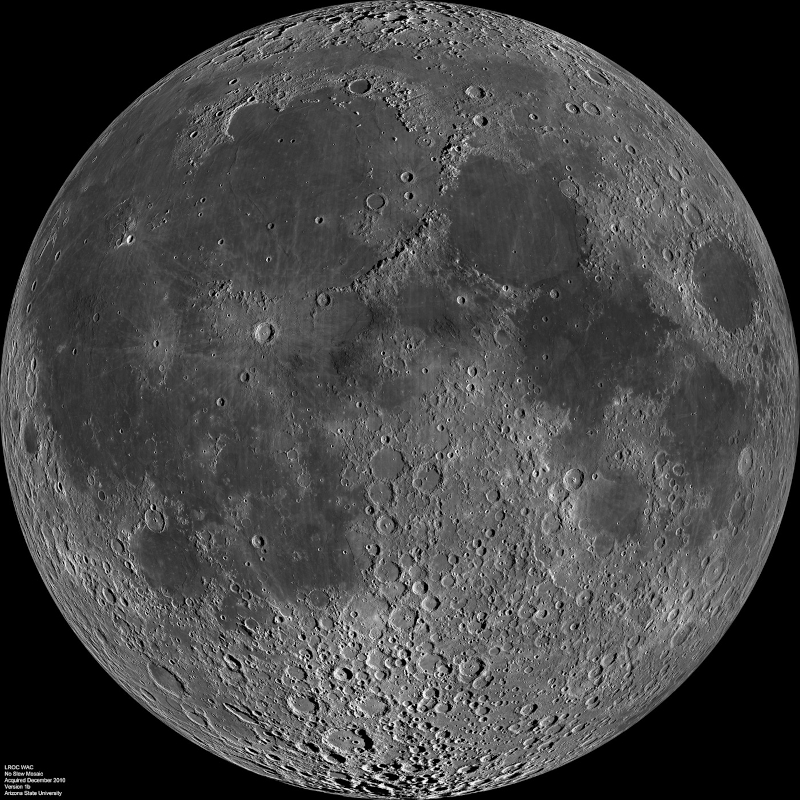
On April 27, 2026, NASA filed paperwork indicating it would increase the maximum value of its Commercial Lunar Payload Services contract from $2.6 billion to $4.2 billion, a move that reflects ambitions laid out in March at an agency event called Ignition, where officials described plans to establish what they simply called a Moon Base and dramatically increase the cadence of robotic landings on the lunar surface. The filing, posted on the System for Award Management, signals that NASA expects to purchase substantially more lunar lander missions over the next two years than the current contract structure was designed to accommodate.

The CLPS program currently lists 13 companies eligible to compete for task orders delivering scientific instruments and technology demonstrations to the Moon. Task orders awarded to date total less than $2 billion, and with the program averaging roughly two awards per year, the original ceiling would not have been reached until 2028. The planned increase to $4.2 billion suggests NASA intends to accelerate that pace considerably, buying missions at a rate that would support the lunar base construction schedule officials described at Ignition.

That schedule calls for nine lunar landings in 2027 and ten in 2028, a dramatic leap from the current flight rate. In 2025, NASA conducted two CLPS missions: one by Firefly Aerospace and another by Intuitive Machines. For 2026, the agency projects up to four lander missions, though internal charts shown at the Ignition event displayed only two projected landings for the year. The gap between the published projection of four and the Ignition chart showing two reflects the uncertainty that industry observers have noted about whether the supply chain and manufacturing capacity can support the proposed cadence.

Speaking at the Lunar Surface Innovation Consortium spring meeting on April 29, Joel Kearns, deputy associate administrator for exploration in NASA’s Science Mission Directorate, acknowledged the agency’s intention to buy more missions. We are looking into opportunities to buy into that ramp of demand for the very short term even as we work on issuing the CLPS 2.0 contract competition, he said. The agency needs to start ramping now into this higher cadence, with a target of monthly landings, to bring some of the things to the surface very, very soon for Moon Base.

The companies vying for CLPS task orders have been expanding their manufacturing capacity in response to the signals from NASA. Firefly Aerospace has three Blue Ghost landers in production, numbered 2, 3, and 4, and has built out additional clean room space capable of supporting eight spacecraft simultaneously. Blue Origin is completing thermal vacuum testing of its first Blue Moon Mark 1 lander, named Endurance, at its Florida factory, and is already manufacturing components for a second Mark 1 to be used for NASA’s VIPER rover in 2027. The company’s Lunar Plant 1 facility spans 190,000 square feet dedicated to lunar lander production.

Astrobotic, which experienced a failure with its first Peregrine lander in January 2024, has scaled its facilities for multiple concurrent lander builds. Intuitive Machines, which has completed three CLPS missions including one that landed successfully in February 2024 and another that tipped over on its side, is working to standardize its lander designs as production rates increase. The company received the IM-5 task order at the Ignition event, with a launch projected for 2030, the same year the company was selected for a south polar landing mission.

One of the central questions about the accelerated cadence is whether the supply chain for lander components can keep pace. Representatives from the CLPS companies noted during the April 29 panel that early landers were essentially bespoke, modified for each mission’s specific payload requirements. Standardization would allow build-to-print manufacturing at higher rates, reducing cost and increasing throughput. The industry response to NASA’s call has been cautious but willing. We have heard the call. We know this is NASA’s initiative, and we want to do more and more, said Farah Zuberi, director of spacecraft mission management at Firefly. Having that signal is really important. We know that this is coming. We can set ourselves up for success.

The Moon Base concept as presented at Ignition represents a shift from NASA’s earlier approach, which emphasized the Gateway, a small space station in lunar orbit that was to serve as a staging point for surface missions. NASA has paused work on the Gateway to focus on surface infrastructure, a decision that affects international partners including the European Space Agency and Japan’s JAXA, which had been developing components for the orbital outpost. The rescaling of plans does not eliminate the need for lunar communication and navigation infrastructure, but it changes the sequence in which capabilities are delivered to the surface.

Scaling lander production from one or two vehicles per year to monthly landings requires changes throughout the manufacturing process. A lunar lander contains thousands of components sourced from dozens of suppliers, and each component must meet the reliability standards that NASA imposes for missions to the Moon. The challenge is not merely assembling more vehicles; it is maintaining quality and traceability across a higher production volume while reducing the per-unit cost enough to make the business case work.

One approach companies are adopting is modular design, where the lander bus remains largely constant across missions while payload accommodation is standardized through interface control documents. This allows the same structural frame, propulsion system, and thermal control to be manufactured in larger batches, improving quality control and reducing the engineering time spent on each individual vehicle. The payload interface, which historically required custom work for each mission’s instruments, is being standardized to the point where a new payload can be integrated without modifying the lander’s core systems.

The supply chain for propulsion components is one of the limiting factors in lander production. Thrusters, valves, propellant tanks, and associated electronics each require precision manufacturing and testing that cannot be accelerated arbitrarily. Companies are responding by qualifying multiple suppliers for critical components, bringing assembly in-house for subsystems where external vendors create bottlenecks, and building inventory of long-lead items in advance of mission awards. These strategies reduce the manufacturing timeline but introduce cost and risk that smaller production runs do not bear.

Testing protocols for landers also require adaptation. A spacecraft destined for the lunar surface must survive the vibration of launch, the vacuum of space, the thermal environment of lunar orbit, and the descent to the surface. Each test requires facilities, equipment, and time that scale with production volume. Companies are investing in additional thermal vacuum chambers and vibration test stands to handle the higher throughput, but the facility investment is substantial and must be justified by a production rate that may not materialize if NASA adjusts its acquisition strategy.


Arc is a space-based delivery system designed to place payloads in low Earth orbit and return them to any point on the planet on short notice. The concept combines long-duration on-orbit storage with high-speed atmospheric reentry, targeting end-to-end delivery times on the order of one hour. Early deployments are expected to support defense logistics, where rapid, global reach and independence from ground infrastructure are operational priorities.

The architecture separates insertion, storage, and delivery into distinct phases. A launch vehicle places Arc into orbit, where it can remain for extended periods—reported up to five years—while maintaining payload integrity. When tasked, the vehicle performs a deorbit maneuver, enters the atmosphere at hypersonic speed, and navigates to a designated landing zone. The critical engineering problems lie in orbital station-keeping, long-duration systems reliability, guidance through hypersonic flight, and thermal protection during reentry.

Orbital mechanics govern the first and last phases. While in orbit, Arc must maintain its trajectory against perturbations such as atmospheric drag, Earth’s oblateness, and solar radiation pressure. Station-keeping requires small but precise velocity corrections using onboard propulsion. Over multi-year durations, consumables, propellant margins, and system degradation become dominant design considerations. Components must be selected for radiation tolerance, vacuum operation, and minimal outgassing to preserve both vehicle performance and payload condition.

The transition from orbit to reentry begins with a deorbit burn that reduces orbital velocity enough to intersect the atmosphere. From this point, the vehicle accelerates under gravity and encounters increasingly dense air. At Mach 25—approximately orbital velocity—the kinetic energy per unit mass is extremely high. As Arc compresses the air in front of it, a shock layer forms, and gas temperatures rise to several thousand degrees Celsius. The resulting heat flux is the primary constraint on vehicle design.

Thermal protection is therefore central. Reentry vehicles typically use ablative materials, high-temperature ceramics, or reinforced carbon composites to manage heat loads. Ablative systems absorb heat by undergoing controlled material loss, carrying energy away as the surface erodes. Reusable systems rely on materials that tolerate high temperatures without significant degradation, often combined with insulation layers that protect underlying structures. The selection depends on mission cadence, refurbishment strategy, and allowable mass. For a system intended for repeated operations with rapid turnaround, durability and inspectability of the thermal protection system are critical.

Aerothermodynamics also affects communication and control. At peak heating, the ionized gas around the vehicle can attenuate radio signals, leading to a communications blackout. Guidance must therefore rely on onboard navigation during this phase. Inertial measurement units, star trackers (used prior to plasma formation), and potentially terrain-relative navigation during lower-altitude flight provide the necessary state estimation. Control surfaces or reaction control systems adjust the vehicle’s attitude to manage lift and drag, shaping the trajectory to meet landing constraints while controlling thermal and structural loads.

The trajectory itself is not a simple ballistic descent. By flying a controlled hypersonic glide, the vehicle can trade speed for range and manage deceleration over a longer path, reducing peak loads. Lift generation at hypersonic speeds depends on body shape and angle of attack. The design must balance aerodynamic efficiency with thermal considerations, as higher lift configurations can increase heating on specific surfaces.

Payload integrity introduces additional requirements. During storage, payloads must be protected from radiation, temperature fluctuations, and micro-vibrations. Power and environmental control systems maintain conditions appropriate to the cargo, which may include electronics, materials, or time-sensitive equipment. During reentry, the payload experiences high deceleration forces and thermal gradients. Mechanical isolation, structural reinforcement, and thermal buffering are necessary to ensure that payload specifications are not exceeded.

The guidance, navigation, and control system must integrate multiple data sources and operate across regimes that span vacuum, rarefied flow, and continuum aerodynamics. Control authority transitions as the vehicle descends: reaction control thrusters dominate at high altitudes, while aerodynamic control surfaces become effective as dynamic pressure increases. The control laws must be robust to uncertainties in atmospheric density, which can vary with weather and solar activity.

Operationally, the value of Arc lies in latency reduction and routing flexibility. Traditional logistics depend on ground-based transport and fixed infrastructure, which introduce delays and constraints. An orbital system decouples storage from delivery location. However, this introduces trade-offs in cost, regulatory considerations for overflight and landing, and the need for precise coordination with airspace management.

The involvement of NASA Ames Research Center indicates the application of established expertise in entry systems, aerothermodynamics, and guidance. Facilities and methods developed for planetary entry missions—such as high-enthalpy wind tunnels, computational fluid dynamics for hypersonic flow, and flight software validation—are directly relevant to a vehicle like Arc.

From a systems engineering perspective, reliability over long dormancy periods is a key differentiator. Components must tolerate extended time in orbit without maintenance and then perform on demand. This affects battery chemistry, seal integrity, lubrication in vacuum, and fault management. Redundancy strategies and health monitoring are required to detect degradation and ensure readiness.

Arc combines known physical principles—orbital mechanics, hypersonic aerodynamics, and thermal protection—with a specific operational model centered on rapid, global delivery. The feasibility of the concept depends on managing extreme thermal loads during reentry, maintaining system reliability over multi-year periods in orbit, and executing precise guidance through a wide range of flight conditions. If these challenges are addressed, the system provides a new capability in logistics, defined by speed and independence from terrestrial constraints.

Video credit: Inversion


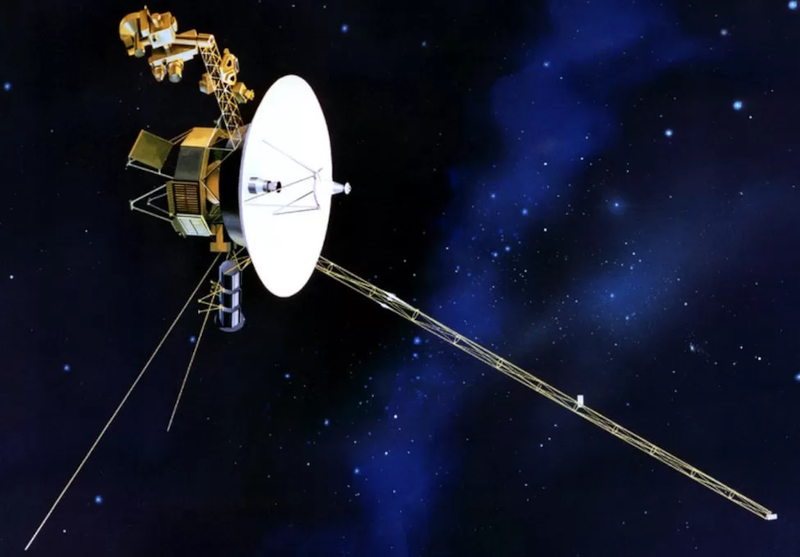
On February 27, 2026, Voyager 1 experienced an unexpected drop in power levels during a routine roll maneuver. The spacecraft, now more than 25 billion kilometers from Earth, relies on a radioisotope thermoelectric generator that produces less electricity each year as its plutonium fuel decays. The February anomaly triggered a response from mission engineers at NASA’s Jet Propulsion Laboratory in Pasadena, who recognized that any further power decline could force the spacecraft’s fault protection system to shut down systems autonomously, a recovery process that would carry significant risk for a spacecraft operating in interstellar space.

The team acted before that became necessary. On April 17, 2026, engineers sent commands to shut down the Low-Energy Charged Particles experiment aboard Voyager 1, an instrument that had operated nearly continuously since the spacecraft launched in September 1977. The LECP measures ions, electrons, and cosmic rays originating from both the solar system and the galaxy beyond, and it played a central role in confirming that Voyager 1 had crossed the heliopause into interstellar space in 2012. Turning it off was not a decision made under pressure. Years earlier, the science and engineering teams had agreed on a sequence for shutting down spacecraft systems while preserving the mission’s ability to continue collecting data. The LECP was simply next on the list.

The command had to travel 23 hours to reach the spacecraft, and the shutdown process itself took another three hours and fifteen minutes. Of the ten instrument sets Voyager 1 carries, seven have now been turned off. Voyager 2 lost its LECP in March 2025. Both spacecraft now retain two science instruments each: the Plasma Wave Subsystem, which detects oscillations in the charged particle environment, and the Magnetometer, which measures the strength and direction of magnetic fields in interstellar space. These two instruments provide the only ongoing measurements of the region beyond the Sun’s protective bubble, and keeping them operating is the mission’s overriding priority.

The shutdown buys approximately one year of additional operation. During that time, engineers are finalizing a more ambitious fix they call the Big Bang, named with characteristic mission humor for the dramatic swap of multiple powered systems at once. The concept involves turning off a group of higher-power devices and simultaneously activating lower-power alternatives that serve the same thermal and operational functions. Keeping the spacecraft warm enough to prevent its fuel lines from freezing is the central challenge. The plutonium generator provides heat as well as electricity, and as output declines, the thermal margin that protects tubing and mechanisms narrows. The Big Bang approach addresses this by shedding power loads that are less critical while maintaining the thermal environment the spacecraft needs to survive.

The team will test the procedure on Voyager 2 first, beginning in May and running through June 2026. Voyager 2 is closer to Earth, making communication more responsive, and it has slightly more power margin than its twin, making it the safer test subject. If the May-June tests succeed, engineers will attempt the same swap on Voyager 1 no earlier than July 2026. There is even a possibility that Voyager 1’s LECP could be switched back on if the power savings materialize as projected.

Both Voyagers lose approximately four watts of power per year. At launch, each generator produced about 470 watts. They now produce roughly 250 watts, and the decline continues. The spacecraft were built to last five years. They have now operated for nearly 49. The Big Bang represents the latest in a series of engineering compromises that have kept the probes functional far beyond anyone’s expectation, trading instrument capabilities for survival, and survival for the chance to keep returning data from a region of space that no other human-made object will reach for generations, if ever again.

The one-light-day milestone, when Voyager 1 reaches exactly the distance that light travels in one day, approximately 25.9 billion kilometers, is expected in November 2026. It will be a symbolic moment. The real story is quieter: a team of engineers, some of them not yet born when the spacecraft launched, making decisions about power allocation and instrument status for two probes that crossed the boundary between solar system and galaxy before most people reading this were born.

Radioisotope thermoelectric generators convert heat from radioactive decay into electricity through the Seebeck effect, where temperature differences between semiconductor materials generate a voltage. The Voyager RTGs contain plutonium-238, which decays with a half-life of 87.7 years, meaning the fuel supply shrinks by roughly 0.8 percent each year. The generator’s electrical output follows roughly the same curve, which is why the four-watts-per-year decline is predictable and planned for.

The thermal output of the RTG, currently around 2,400 watts, exceeds its electrical output by an order of magnitude. This heat is not waste; it is the primary thermal management mechanism for the spacecraft. The electronics and propulsion systems are designed to operate within a specific temperature range, and the RTG’s warmth keeps them there. As the generator cools, the thermal margin decreases, requiring engineers to balance electrical load against thermal load in ways that were not anticipated during the 1970s design phase.

The fault protection system that nearly triggered in February operates on voltage thresholds. If power drops below a certain level, the spacecraft automatically shuts down non-essential systems to preserve core functions. The shutdown is designed to be recoverable, but recovery requires the spacecraft to orient its high-gain antenna toward Earth and receive commands, a process that takes time and is complicated by the 23-hour communication delay. More importantly, an uncontrolled shutdown could leave the spacecraft in a state where instruments needed for science are offline. Preventing that scenario drove the decision to shut down LECP deliberately rather than wait for the fault system to act.

The Big Bang, if successful, will further reduce power consumption by switching to redundant systems that draw less current while performing the same thermal maintenance functions. The switch must be simultaneous because the spacecraft’s thermal control depends on continuous heat input. Any gap in heating could allow components to cool below their minimum operating temperature, causing damage that would be irreversible at 25 billion kilometers.


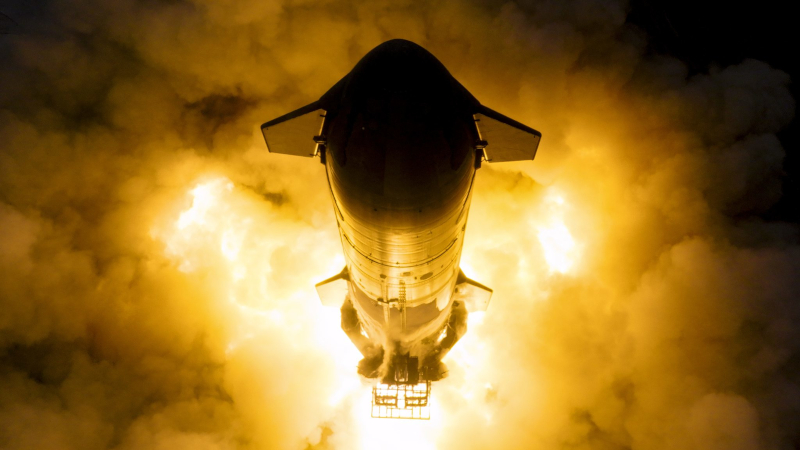
The next integrated test of Starship is positioned as a configuration transition rather than a routine increment. Flight 12, targeting early to mid-May 2026 from Starbase Orbital Launch Pad 2, is the first mission planned to use Version 3 (Block 3) hardware. The flight stack—Super Heavy Booster 19 and Starship Ship 39—incorporates design changes intended to improve propulsion performance, structural efficiency, and overall system reliability.

Pre-flight validation has centered on static fire testing. On April 15, 2026, Booster 19 executed a full-duration ignition of all 33 engines at the McGregor test facility. This was the first complete integrated test of the updated propulsion configuration using Raptor 3 engines. The preceding day, Ship 39 conducted a static fire of its six engines, including vacuum-optimized variants. These tests are designed to verify ignition sequencing, thrust vector control response, propellant flow stability, and structural load handling prior to flight.

The propulsion system is the primary area of change in Version 3. The Raptor engine operates on a full-flow staged combustion cycle using liquid methane and liquid oxygen. In this cycle, both propellants are fully gasified in separate preburners before entering the main combustion chamber. This approach allows for high chamber pressures and improved efficiency relative to simpler cycles, but it requires precise control of turbomachinery and flow balance. The Raptor 3 iteration focuses on simplification and integration. External plumbing has been reduced, and thermal management features are incorporated more directly into the engine structure. The intent is to decrease part count, reduce mass, and improve manufacturability while maintaining or increasing performance.

For Booster 19, the use of 33 engines introduces additional system-level considerations. Engine-out capability, thrust balancing, and control authority must be validated under conditions where all engines are firing simultaneously. The static fire provides data on pressure stability across the propellant manifolds, synchronization of ignition timing, and the response of the thrust vector control system. Structural loads transmitted through the thrust puck and into the booster’s primary structure are measured and compared against design predictions.

Ship 39’s propulsion configuration includes both sea-level and vacuum-optimized engines. The vacuum engines use larger expansion ratio nozzles to increase exhaust velocity in low-pressure environments. This improves specific impulse, which is a measure of propulsion efficiency. The trade-off is that these nozzles are not suitable for operation at sea level due to flow separation risks. The combined configuration allows the vehicle to operate efficiently across ascent and in-space phases. Static fire testing of Ship 39 validates ignition reliability, mixture ratio control, and thermal behavior of the extended nozzles.

Beyond propulsion, Version 3 hardware reflects iterative changes in structure and systems integration. Starship’s primary structure is composed of stainless steel, chosen for its strength at cryogenic temperatures and its ability to tolerate high thermal loads during reentry. Modifications in weld patterns, ring structures, and internal tank geometry are aimed at improving load distribution and reducing mass. These changes must be validated through both ground testing and flight data, as structural margins are closely tied to vehicle performance and reusability goals.

Propellant management is another area of focus. The vehicles use subcooled liquid methane and liquid oxygen, which require careful handling to maintain density and prevent cavitation in turbopumps. Tank pressurization systems must ensure consistent flow to the engines while accommodating changes in acceleration and orientation during flight. Static fire tests provide an opportunity to observe these systems under controlled conditions, including the behavior of autogenous pressurization, where gaseous propellants are used to maintain tank pressure.

The planned flight profile for Flight 12 remains suborbital, consistent with previous integrated tests. This allows the program to evaluate ascent performance, stage separation, and initial reentry behavior without committing to a full orbital insertion. Data collected during ascent will include engine performance metrics, structural loads, and aerodynamic response. Stage separation dynamics are of particular interest, as they involve complex interactions between the booster and upper stage, including plume effects and transient forces.

Reentry testing focuses on thermal protection and guidance. Starship uses a combination of passive and active systems to manage heat loads. The vehicle’s geometry distributes heating across the windward surface, while thermal protection tiles provide insulation. Guidance algorithms control the vehicle’s orientation to maintain a stable descent profile, balancing drag and lift to manage deceleration. Flight 12 is expected to provide additional data on tile performance, attachment reliability, and thermal gradients across the structure.

The integration of these systems reflects a broader engineering approach centered on rapid iteration. Design changes are implemented, tested, and refined in successive vehicles. Static fire campaigns serve as gate checks, confirming that major subsystems perform as expected before flight. The transition to Version 3 hardware indicates that the program has reached a stage where incremental improvements are being consolidated into a more mature configuration.

From a systems engineering perspective, Flight 12 is a validation of integration rather than a demonstration of isolated components. Propulsion, structure, guidance, and thermal systems must operate together under dynamic conditions. The objective is to reduce uncertainty in how these systems interact, providing data that informs future design decisions and operational procedures.

The significance of this flight lies in its role as a configuration baseline. If Version 3 hardware performs as intended, it establishes a reference point for subsequent vehicles, supporting the program’s goal of achieving full reusability. This includes rapid turnaround between flights, consistent performance across missions, and the ability to scale production.

Starship Flight 12 represents a transition to a more integrated and refined vehicle configuration. The static fire tests of Booster 19 and Ship 39 have validated key aspects of the propulsion system and supporting infrastructure. The upcoming flight will extend this validation into operational conditions, providing data on ascent, separation, and reentry. The outcome will determine the effectiveness of the Version 3 design changes and their contribution to the overall development of the launch system.


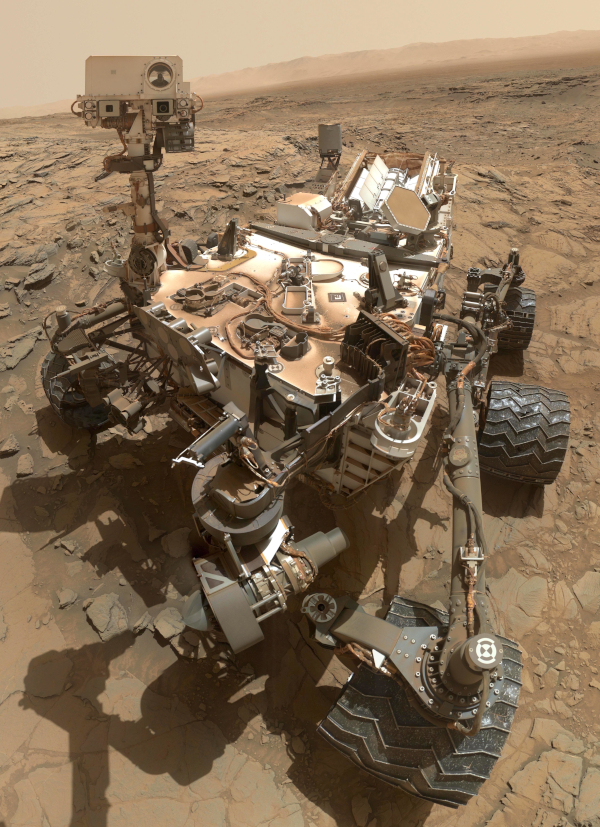
The search for signs of past life on Mars crossed a significant threshold in late April 2026, when an international team of researchers announced that NASA’s Curiosity rover had identified more than 20 distinct organic molecules preserved in ancient Martian rocks, including a nitrogen-containing compound whose structure resembles one of the building blocks of DNA. The findings, published on April 21, 2026, in the journal Nature Communications, represent the most diverse inventory of organic compounds ever detected on the Red Planet and demonstrate that the Martian subsurface is capable of protecting complex carbon-based chemistry for billions of years.

The discovery came from a chemical experiment conducted on another planet for the first time in history. Scientists used the Sample Analysis at Mars instrument suite, known as SAM, aboard Curiosity to analyze regolith and rock powder collected in the Glen Torridon region of Gale Crater. This area, explored by the rover in 2020, sits on the flanks of Mount Sharp and contains clay minerals that formed in the presence of liquid water approximately 3.5 billion years ago. Clay-rich environments are especially effective at trapping and shielding organic material from the radiation and oxidation that would otherwise destroy complex molecules near the Martian surface.

The experiment employed a chemical reagent called tetramethylammonium hydroxide, abbreviated TMAH, to break down larger organic molecules into smaller fragments that the SAM instruments could vaporize and characterize. The reagent is commonly used in geochemistry laboratories on Earth to liberate organic compounds from rock matrices without destroying them. Because Curiosity carries only a limited supply of TMAH, researchers spent considerable time selecting the optimal sampling site and timing the experiment to maximize scientific return. The successful execution of this procedure on Mars marks a milestone in analytical chemistry performed by robotic spacecraft at interplanetary distances.

Among the compounds detected, the nitrogen-containing molecule attracted particular attention. Its structure resembles nucleobases, the units that encode genetic information in DNA and RNA on Earth. The same class of molecules has been found in carbonaceous meteorites, which deliver organic material to planetary surfaces throughout the solar system. “The same stuff that rained down on Mars from meteorites is what rained down on Earth, and it probably provided the building blocks for life as we know it on our planet,” said Amy Williams, a geological sciences professor at the University of Florida and a member of both the Curiosity and Perseverance science teams, in a statement accompanying the paper’s release.

The rover also detected benzothiophene, a sulfur-containing molecule with a double-ring structure that is commonly found in meteorites and is associated with organic matter delivered from space rather than biological processes. This underscores a central challenge in interpreting organic detections on Mars: distinguishing between compounds that arrived via meteorite infall and those that might have a more local or biological origin. The Glen Torridon samples contained molecules in sufficient quantity and variety that the researchers concluded they were examining genuinely preserved ancient organic matter, rather than terrestrial contamination or trace amounts consistent with meteorite delivery alone.

Gale Crater was chosen as Curiosity’s landing site precisely because orbital spectroscopy had identified clay minerals in the region, suggesting a past environment where liquid water was stable and potentially hospitable to life. The rover arrived in August 2012 and has spent the subsequent years traversing the crater floor and ascending Mount Sharp, analyzing rock formations that record billions of years of Martian geological history. The Glen Torridon stop represented a particularly promising target because the clay minerals there act as molecular sponges, capturing and preserving organic compounds that would otherwise be degraded by cosmic rays and perchlorate chemicals in the Martian soil.

The detection of preserved organics in the shallow subsurface has direct implications for how scientists plan the next phase of Mars exploration. The ESA Rosalind Franklin rover, scheduled to launch on a SpaceX Falcon Heavy in late 2028, will carry a version of the TMAH extraction technique to a different landing site on Oxia Planum, where clay-rich deposits also exist. NASA’s Dragonfly mission to Saturn’s moon Titan, currently targeting launch in the 2030s, will employ similar chemical analysis methods on organic-rich sediments on that distant world’s surface. The success of the SAM TMAH experiment on Curiosity validates the approach and builds confidence that robotic chemistry can recover meaningful organic signatures without requiring sample return to Earth.

The authors of the Nature Communications paper are careful to note that the presence of these molecules does not constitute evidence of past life on Mars. The compounds could have arrived via meteorite infall, formed through geochemical processes in the Martian crust, or been delivered by hydrothermal systems that once operated in Gale Crater. What the discovery demonstrates is that the chemistry of life, or its precursors, has existed on Mars in sufficient quantity and diversity to be detectable after 3.5 billion years of preservation. The question of whether that chemistry ever organized itself into anything resembling living systems remains unanswered and will only be resolved when Martian samples are returned to terrestrial laboratories.

NASA’s Perseverance rover, which landed in Jezero Crater in 2021, is actively collecting and caching rock samples for eventual return to Earth as part of the Mars Sample Return campaign. The campaign, involving NASA and ESA, plans to launch the collected samples aboard a small rocket from the Martian surface and rendezvous them with an Earth return orbiter for delivery to scientists on the ground. That mission architecture is currently undergoing review and development, with the first sample return targeted for the early 2030s. Until Martian material can be examined with the full arsenal of instruments available in terrestrial laboratories, Curiosity’s latest finding stands as the most compelling indication yet that the raw ingredients for life were present on our neighboring planet at a time when life was also emerging on Earth.

Understanding why organic molecules survive on Mars requires examining the planet’s unusual surface chemistry. The Martian regolith contains perchlorate salts at concentrations of up to one percent in some soils. Perchlorates are powerful oxidizing agents that break down organic compounds when activated by ultraviolet radiation from the Sun. This chemical environment, combined with the constant bombardment of cosmic rays and solar particles that penetrate the thin Martian atmosphere, should in theory destroy exposed organic molecules within millions of years.

The clay minerals in formations like Glen Torridon offer a protective environment that substantially extends this timescale. Smectite clays, the class of clay minerals dominant in Gale Crater, have a layered sheet structure that traps molecules between the layers and shields them from radiation and reactive chemicals. The same property makes these clays useful in contamination remediation on Earth, where they are employed to immobilize organic pollutants in soils and groundwater.

The TMAH extraction process works by dissolving the clay matrix and releasing the trapped molecules for analysis. The reagent acts as a strong base that breaks the chemical bonds between the clay layers and the organic compounds, allowing the molecules to enter solution where they can be vaporized and analyzed by mass spectrometry. The SAM instrument heats the extracted samples to temperatures that ionize the organic molecules, then separates the ions by mass-to-charge ratio to identify the constituent compounds. This technique, routine in terrestrial geochemistry, had never been applied on another planet until Curiosity’s team adapted it for the SAM instrument’s constraints on mass, power, and consumables.


With a launch now scheduled for September 2026—well ahead of its required readiness date—Nancy Grace Roman Space Telescope has completed the most critical phase of its development: environmental qualification. These tests are not demonstrations of capability in the scientific sense; they are validations of survivability and stability. A space observatory must operate at the limits of measurement precision, but it must first endure the mechanical and thermal stresses of launch and the transition to the space environment without degradation of performance. The recent test campaign confirms that Roman meets those requirements.

The purpose of environmental testing is to replicate, within controlled facilities, the physical conditions the spacecraft will encounter from liftoff through on-orbit operation. This includes high acoustic loads, structural vibration, and exposure to vacuum and extreme temperatures. Each test isolates a class of stressors, allowing engineers to verify both structural integrity and functional performance under conditions that cannot be fully reproduced in flight until it is too late to intervene.

Acoustic testing simulates the intense sound pressure environment generated during launch. Rocket engines produce broadband acoustic energy that couples into the payload fairing and the spacecraft structure. These pressure waves can induce vibrations in panels, fasteners, and optical assemblies. Roman was exposed to high-intensity acoustic fields in a controlled chamber to validate that its structure, instrument mounts, and fasteners remain within allowable limits. The underlying physics is straightforward: fluctuating pressure fields create dynamic loads on surfaces. The engineering challenge is ensuring that these loads do not excite resonant modes that could amplify motion beyond acceptable thresholds.

Complementing acoustic tests are direct vibration tests. In this phase, the observatory is mounted on a shaker system that applies controlled accelerations across multiple axes. These inputs replicate the mechanical environment of ascent, including engine thrust oscillations and aerodynamic loads transmitted through the launch vehicle. Roman underwent vibration testing while enclosed in a protective clean tent to maintain contamination control for its sensitive optics and detectors. The goal is to verify that structural elements maintain alignment and that subsystems—such as avionics, harnessing, and instrument assemblies—remain functional after exposure. Engineers analyze responses using accelerometers and strain gauges, comparing measured data against predicted modal characteristics from structural models.

A second launch simulation further validates the integrated system response. While individual tests target specific stressors, combined simulations provide confidence that interactions between subsystems do not introduce unexpected behavior. This is particularly important for an observatory like Roman, where optical performance depends on the precise alignment of mirrors and detectors. Even small shifts can affect image quality and calibration.

Thermal vacuum testing addresses the transition from Earth’s environment to space. Once deployed, Roman will operate near the Sun–Earth L2 point, where it will experience a stable but extreme thermal environment and high vacuum. In a thermal vacuum chamber, the observatory is placed under vacuum conditions and subjected to controlled temperature cycles that replicate on-orbit conditions. Radiative heat transfer becomes the dominant mechanism, as convection is absent. Engineers cool the observatory to its operational temperature range and monitor the behavior of materials, electronics, and instruments.

Thermal stability is critical for Roman’s science objectives. The Wide Field Instrument operates in the near-infrared, where detector performance is sensitive to temperature. Variations can introduce noise, alter calibration, and affect measurement accuracy. The thermal design uses a combination of passive elements—such as multilayer insulation and radiators—and active control systems to maintain stability. During testing, temperature sensors distributed throughout the observatory provide data to verify that gradients and absolute temperatures remain within specified limits.

Vacuum conditions also test outgassing and contamination control. Materials used in spacecraft can release volatile compounds in vacuum, which may condense on optical surfaces. Roman’s test campaign ensures that materials and coatings meet stringent cleanliness requirements, preserving optical throughput and minimizing stray light.

Throughout the environmental test sequence, functional testing is performed to confirm that systems operate as intended. This includes powering instruments, validating data paths, and checking command and telemetry interfaces. The philosophy is to verify not only that the observatory survives the environment, but that it remains fully operational after exposure.

The engineering approach relies on a combination of analysis, test, and margin. Structural and thermal models predict how the observatory should respond. Environmental tests provide empirical data to validate those models. Margins are included to account for uncertainties, ensuring that the system can tolerate conditions slightly beyond expected levels. The agreement between test results and predictions is a key indicator of readiness.

The outcome of this campaign is a reduction in programmatic risk. By demonstrating that Roman can withstand launch and operate in space-like conditions, the project confirms that the observatory is ready to proceed toward flight. Advancing the launch date reflects confidence in both the hardware and the verification process.

While the environmental tests do not directly measure scientific performance, they are prerequisites for it. Roman’s primary objectives—wide-field surveys in the near-infrared, studies of large-scale structure, and measurements related to dark matter and dark energy—depend on stable, well-calibrated instruments. The ability to maintain optical alignment, thermal stability, and detector performance is what enables those measurements.

In summary, the environmental qualification of the Nancy Grace Roman Space Telescope demonstrates that the observatory meets the mechanical and thermal requirements of launch and space operation. The combination of acoustic, vibration, and thermal vacuum testing provides a comprehensive validation of its design. With these tests complete and an earlier launch date established, Roman transitions from a development program to a flight-ready observatory prepared to begin its operational mission.

Video credit: NASA Goddard