OrbitalHub

The place where space exploration, science, and engineering meet

Domain is for sale. $50,000,000.00 USD. Direct any inquiries to contact@orbitalhub.com.


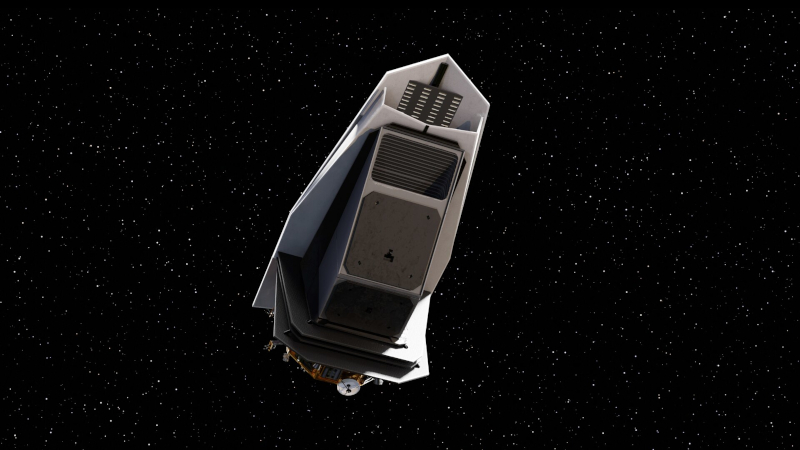
In the history of astronomy, certain instruments do more than gather light — they reshape perspective. The Hubble Space Telescope revealed a universe of breathtaking clarity and depth. The James Webb Space Telescope opened a new infrared frontier, peering into the earliest epochs of galaxy formation. And now, standing on the shoulders of those giants, NASA’s Nancy Grace Roman Space Telescope prepares to widen our cosmic view in a way no space observatory has done before.

Named after Nancy Grace Roman, NASA’s first Chief of Astronomy and one of the architects of the Hubble program, the Roman Space Telescope is built on a bold premise: if we want to understand the structure and fate of the universe, we must not only see deeply — we must see broadly. Roman is not designed to zoom in on a single galaxy with exquisite detail. Instead, it is built to survey immense swaths of the sky with Hubble-level sharpness, combining resolution and scale in a way that has never before been achieved.

At the heart of Roman is a 2.4-meter primary mirror — the same diameter as Hubble’s — but paired with a field of view nearly one hundred times larger. That combination defines the mission. Where Hubble sees a small patch of sky in exquisite detail, Roman will see vast cosmic landscapes with comparable clarity. It is as though we have replaced a telescope’s keyhole view with a panoramic window.

The mission has two central scientific pillars. The first is to investigate the nature of dark energy, the mysterious force driving the accelerated expansion of the universe. The second is to conduct a census of exoplanets through gravitational microlensing, extending our knowledge of planetary systems far beyond what current techniques allow. Together, these goals address some of the most profound questions in modern astrophysics: What is the universe made of? How did it evolve? And how common are worlds like our own?

The engineering behind Roman reflects the demands of those ambitions. The telescope’s Wide Field Instrument is its primary scientific eye, operating in near-infrared wavelengths. This wavelength range is critical because it allows astronomers to observe distant galaxies whose light has been stretched, or redshifted, by cosmic expansion. The instrument consists of eighteen state-of-the-art infrared detectors arranged in a mosaic, creating a detector array of enormous scale and sensitivity. Each exposure captures a sky area equivalent to dozens of Hubble images stitched together — except it happens all at once.

The spacecraft itself is designed for precision and stability. Roman will operate in a Sun-Earth L2 orbit, approximately 1.5 million kilometers from Earth. This location provides a thermally stable environment, continuous sunlight for solar power, and a steady observational platform free from Earth’s shadow. Maintaining exquisite pointing accuracy is essential; even slight jitter would compromise measurements of subtle cosmic distortions. Advanced reaction wheels, gyroscopes, and fine guidance sensors work together to ensure the telescope holds its gaze with extraordinary steadiness.

One of Roman’s most important capabilities is its ability to measure weak gravitational lensing. According to Einstein’s general theory of relativity, mass bends spacetime, and light traveling through that curved spacetime follows the distortion. When light from distant galaxies passes near massive structures such as galaxy clusters or dark matter halos, its path is subtly altered. By statistically analyzing the shapes of millions of galaxies across vast areas of sky, Roman will map the invisible distribution of dark matter and trace how cosmic structures have grown over billions of years.

This mapping is essential for understanding dark energy. The rate at which cosmic structures form and evolve is influenced by the balance between gravity, which pulls matter together, and dark energy, which pushes space apart. Roman will measure this balance with unprecedented statistical power, surveying thousands of square degrees of sky and collecting data from billions of galaxies. The resulting dataset will refine our understanding of cosmic expansion and test whether dark energy behaves like Einstein’s cosmological constant or something more exotic.

At the same time, Roman will search for planets in a way unlike any previous mission. Most exoplanet discoveries have relied on transit photometry, observing the dimming of a star as a planet crosses its face, or radial velocity measurements that detect the gravitational tug of an orbiting planet. Roman’s microlensing survey will instead exploit a phenomenon predicted by general relativity: when a foreground star passes in front of a more distant background star, its gravity magnifies the background star’s light. If the foreground star hosts a planet, that planet can create a distinctive, temporary signature in the magnified light curve.

This technique is uniquely sensitive to planets at greater distances from their stars, including cold, Earth-mass planets and even free-floating planets that drift through space unbound to any star. Roman is expected to discover thousands of new worlds, filling in a region of planetary parameter space that remains largely unexplored. In doing so, it will help astronomers build a more complete picture of planetary system formation and diversity.

Roman will also carry a coronagraph instrument, a technology demonstration designed to block out the light of a star and directly image faint nearby exoplanets. While primarily experimental, the coronagraph will test technologies essential for future missions aimed at imaging Earth-like planets and analyzing their atmospheres for signs of habitability or life.

Perhaps what makes Roman most exciting is the scale of its data. It is not simply another observatory; it is a survey engine. The volume of information it will collect will fuel research for decades, enabling discoveries not yet imagined. Just as the Hubble Deep Field revealed galaxies that challenged cosmological models, Roman’s wide-field surveys are likely to uncover unexpected structures, rare objects, and statistical anomalies that reshape theoretical frameworks.

In many ways, the Roman Space Telescope represents the maturation of space astronomy. It is not designed solely for spectacle, though it will undoubtedly produce stunning images. It is built for measurement — precise, repeatable, statistically robust measurement. It embodies a shift from isolated observations to cosmic cartography.

When Roman opens its wide eye to the sky, it will not simply extend our reach deeper into space. It will expand our view sideways, revealing the structure of the universe at scales we have only begun to comprehend. In doing so, it will continue a legacy that Nancy Grace Roman herself helped establish: that by investing in bold, carefully engineered observatories, we do more than observe the cosmos — we learn to understand our place within it.

Video credit: NASA Goddard


Firefly Aerospace is preparing to return to flight with its Alpha rocket, marking the company’s first launch attempt since experiencing explosive mishaps last year. The upcoming mission represents a critical test of both the rocket’s technical capabilities and the company’s resilience in the face of adversity. For the small but growing team at Firefly, this launch represents an opportunity to demonstrate that lessons learned from failure can lead to future success, and that the commercial space industry can mature through overcoming technical challenges. The aerospace industry is no stranger to setbacks, and Firefly’s story is emblematic of the persistence required to succeed in this challenging field.

The Alpha rocket, designed specifically for small satellite launches, experienced two high-profile failures in previous flight attempts. These incidents, while disappointing, provided valuable data that Firefly’s engineering team has used to identify and address the root causes of the failures. The company has implemented significant design improvements and rigorous testing protocols to ensure the next launch succeeds. This methodical approach to problem-solving reflects the maturity of the team’s engineering practices and their commitment to technical excellence. The failures, while painful, have made the company stronger and more knowledgeable.

Firefly Aerospace has been remarkably transparent about the challenges faced during development, sharing lessons learned with the broader aerospace community. This approach has earned the company credibility within the industry, where failure is often seen as an inevitable part of the development process rather than a permanent setback. The company’s willingness to discuss its difficulties openly stands in contrast to the secrecy that sometimes characterizes aerospace development programs. This transparency has helped build trust with customers and the broader space community, demonstrating a mature approach to doing business.

The small satellite launch market has become increasingly competitive, with numerous companies vying to provide cost-effective access to orbit. Firefly’s return to flight will demonstrate whether the company can compete with established players like SpaceX and Rocket Lab, as well as emerging competitors in the United States and internationally. The market opportunity remains substantial, as demand for small satellite launches continues to grow with the proliferation of constellation networks and dedicated missions. The challenge for Firefly will be differentiating itself in a crowded market and establishing a reliable track record.

The upcoming launch will carry a variety of payloads, demonstrating the rocket’s versatility for different mission requirements. Firefly has positioned Alpha as an ideal platform for dedicated small satellite missions, offering rideshare opportunities and flexible deployment options that larger rockets cannot match. This flexibility could prove attractive to customers who need precise orbit delivery or who want to avoid the wait times associated with larger rideshare programs. The ability to customize missions for specific customer needs is a key competitive advantage in this market segment.

Beyond the immediate launch, Firefly is developing Firefly ML, a medium-lift rocket that will expand the company’s capabilities into larger payloads. This progression follows a common pattern in the aerospace industry, where companies build experience and credibility with smaller systems before moving to larger platforms. The development of Firefly ML will require additional capital and technical investment, making the success of the Alpha return-to-flight mission even more critical for the company’s long-term viability and growth strategy. The roadmap is clear, but execution will be everything.

The return to flight represents more than just a technical milestone for Firefly Aerospace. It is a test of the company’s culture and determination in the face of adversity. The aerospace industry has seen numerous companies rise from failure to success, including SpaceX itself, which experienced multiple early failures before achieving reliability. Firefly is positioning itself to join that tradition, demonstrating that persistence and engineering rigor can overcome initial setbacks. The story of Firefly is ultimately about the resilience of the entrepreneurial spirit in the face of technical challenges.

As the launch approaches, the aerospace community will be watching closely. A successful flight would validate the company’s technical improvements and open new opportunities for growth. A failure, while disappointing, would provide additional data for further improvements. Either way, Firefly Aerospace’s return to flight demonstrates the resilience and determination that characterizes the commercial space industry. The company’s journey reflects the broader narrative of commercial space: bold attempts, hard lessons, and persistent pursuit of ambitious goals that push humanity further into the final frontier.

The significance of Firefly’s return extends beyond the company itself. It represents a test of the commercial space model’s ability to learn from failure and improve. The small launch vehicle market is crucial for the growth of the space economy, providing access for smaller payloads that cannot justify the cost of larger rideshare missions. Firefly’s success or failure will have implications for the entire ecosystem of small launch providers and the customers who depend on them.


There are satellites that flash briefly across the sky and then fade into history, and there are satellites that quietly build a legacy measured not in months, but in generations. The Landsat program belongs firmly to the latter. Since 1972, when the first Landsat spacecraft began circling Earth, the mission has carried forward a simple but transformative idea: that if we observe our planet consistently, patiently, and scientifically, we can understand how it changes—and why.

Landsat was born during a time when space exploration was dominated by lunar ambitions and planetary probes. Yet a handful of scientists and engineers recognized that one of the most important frontiers lay much closer to home. The Earth itself was changing under the pressure of agriculture, urban expansion, deforestation, water use, and climate variability. The Landsat program was designed to provide something unprecedented: a continuous, calibrated, and publicly available record of the planet’s land surface.

From the beginning, the mission’s goals were ambitious. Landsat satellites were built to measure reflected sunlight and emitted thermal radiation from Earth’s surface across multiple wavelengths. This spectral approach allowed scientists to distinguish forests from croplands, healthy vegetation from drought-stressed fields, snow from clouds, and sediment-rich rivers from clear lakes. By observing the same locations again and again over decades, Landsat turned snapshots into time series, revealing patterns that would otherwise remain invisible.

The engineering behind Landsat is a study in precision. Each spacecraft travels in a near-polar, sun-synchronous orbit at an altitude of roughly 700 kilometers. This orbit ensures that the satellite passes over any given location at approximately the same local solar time, maintaining consistent lighting conditions for imaging. Stability and repeatability are paramount. The sensors must be radiometrically calibrated to detect subtle changes in surface reflectance over time. A difference of just a few percent in measured brightness can signal shifts in vegetation health or soil moisture.

Over successive missions, Landsat’s instruments evolved. Early satellites relied on the Multispectral Scanner (MSS), which offered groundbreaking though relatively coarse imagery. Later generations introduced the Thematic Mapper (TM) and Enhanced Thematic Mapper Plus (ETM+), expanding spectral coverage and spatial resolution. With Landsat 8, launched in 2013, the program entered a new era of digital precision with two primary instruments: the Operational Land Imager (OLI) and the Thermal Infrared Sensor (TIRS). Together, they extended the spectral range, improved signal-to-noise performance, and ensured compatibility with the historical data record.

The continuity of the Landsat archive is not an accident—it is a design philosophy. Every new satellite must be cross-calibrated against its predecessor so that the global dataset remains scientifically consistent. This continuity has allowed researchers to track deforestation in the Amazon, glacier retreat in Greenland, urban expansion in Asia, and agricultural water use in the American West. Landsat’s data policy, which made imagery freely available starting in 2008, transformed global access to Earth observation, catalyzing research, commercial innovation, and environmental monitoring on a planetary scale.

It is within this lineage that Landsat 9 emerged.

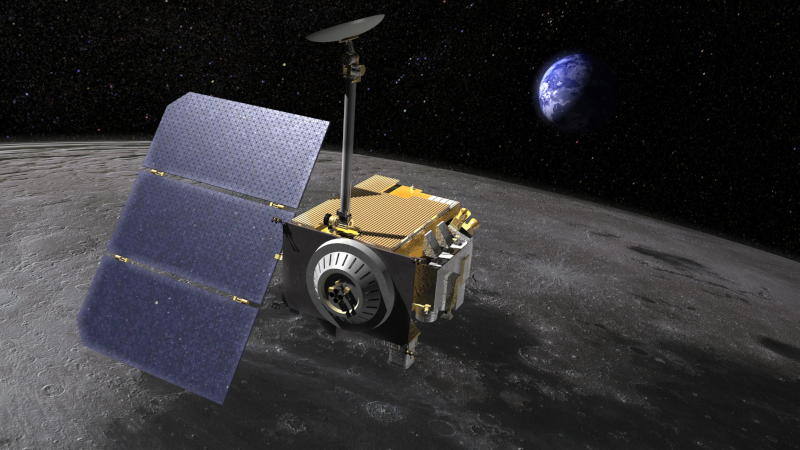
Launched on September 27, 2021, from Vandenberg Space Force Base aboard an Atlas V rocket, Landsat 9 was not conceived as a revolution, but as a promise kept. Its mission was to ensure that the Landsat record—now spanning more than half a century—would continue without interruption. Developed by NASA and operated jointly by NASA and the U.S. Geological Survey (USGS), Landsat 9 carries forward the twin-instrument architecture pioneered by Landsat 8, with refined performance and improved reliability.

At the heart of Landsat 9 is the Operational Land Imager 2 (OLI-2), an advanced multispectral sensor that captures reflected sunlight across visible, near-infrared, and shortwave infrared wavelengths. These spectral bands are carefully chosen to reveal the chemical and structural properties of land surfaces. Vegetation reflects strongly in the near-infrared; water absorbs much of it. Soils, minerals, and built environments each leave distinct spectral signatures. By measuring these patterns, OLI-2 allows scientists to compute vegetation indices, monitor crop productivity, detect wildfire scars, and assess coastal health.

Complementing OLI-2 is the Thermal Infrared Sensor 2 (TIRS-2), which measures land surface temperature. Thermal data are essential for understanding evapotranspiration, drought conditions, urban heat islands, and volcanic activity. Land surface temperature is not merely a climate statistic; it is a dynamic variable that shapes ecosystems, agriculture, and human comfort. TIRS-2 improves upon earlier thermal sensors with better stray-light control and enhanced calibration, strengthening confidence in long-term temperature records.

Together, OLI-2 and TIRS-2 produce imagery with a spatial resolution of 30 meters for most bands and 100 meters for thermal measurements, revisiting the same location every 16 days. When combined with Landsat 8, the effective revisit time drops to eight days, increasing temporal coverage and reducing data gaps caused by cloud cover.

The engineering sophistication of Landsat 9 extends beyond its instruments. The spacecraft platform was built by Northrop Grumman and designed for durability and efficiency, with redundant systems and precise attitude control to maintain stable pointing. The satellite continuously transmits data to ground stations, where it is processed, calibrated, and archived by the USGS. Each image enters a public repository that now contains millions of scenes—a living chronicle of Earth’s surface.

Perhaps the most remarkable aspect of Landsat 9 is how unremarkable it strives to be. Its purpose is not spectacle, but continuity. It does not chase novelty; it protects consistency. In an era of rapid technological turnover, Landsat 9 embodies a different ethos: that sustained observation is as important as innovation.

As climate change accelerates, water resources tighten, and urban populations grow, the need for objective, long-term data becomes ever more urgent. Landsat 9 contributes to this global awareness by quietly collecting photons reflected and emitted from Earth’s surface, converting them into calibrated digital records. These records feed into agricultural planning, disaster response, forest management, and climate science.

The Landsat program began as an experiment in seeing our planet from above. Over five decades, it has become a foundational instrument for understanding it. Landsat 9 stands as the latest steward of that legacy—a spacecraft designed not just to observe the Earth, but to ensure that future generations can compare their world to the one we see today.

In that sense, Landsat 9 is more than a satellite. It is a continuation of a conversation between humanity and its home, a steady voice reminding us that change is measurable, and therefore knowable.

Video credit: NASA Goddard


The American Institute of Aeronautics and Astronautics has released a groundbreaking report identifying ten technologies that will fundamentally reshape aerospace operations, manufacturing, and services over the next two decades. The comprehensive study, titled “Technologies Transforming Aerospace,” draws on insights from over 700 aerospace professionals and nearly two dozen senior technology leaders across industry, academia, and government. This represents the most extensive survey of its kind, capturing the collective wisdom of the aerospace community on the technologies that will define the future of flight and opening new frontiers in how we think about aviation and space exploration. The findings represent a consensus view of where the industry is heading.

Leading the list is AI-Aided Advanced Design and Engineering, which promises to revolutionize how aircraft and spacecraft are conceived and optimized. Machine learning algorithms can now explore design spaces that would take human engineers centuries to examine, leading to more efficient structures, improved aerodynamics, and innovative configurations that were previously unimaginable. This technology is already accelerating development cycles and reducing the cost of bringing new aerospace vehicles from concept to certification. The implications for the industry are profound, potentially democratizing aerospace design by making advanced tools accessible to smaller organizations that previously lacked the resources for extensive simulation and testing.

Alternative Aviation Fuels and Electric Aircraft represent the industry’s response to the imperative of decarbonization. As climate concerns intensify and regulatory pressure increases, aerospace engineers are developing propulsion systems that dramatically reduce carbon emissions. Electric aircraft, once considered science fiction, are now transitioning from experimental prototypes to viable commercial platforms for short-haul routes. The technology is maturing rapidly, with several manufacturers announcing plans for regional electric aircraft within the decade. This represents a fundamental shift in how we think about aircraft propulsion and could eventually transform the entire aviation industry.

Fully Reusable Launch Systems continue to transform the economics of space access. The success of SpaceX’s Falcon 9 has proven the concept, and numerous companies worldwide are developing their own reusable rockets. This technology is democratizing space, making it accessible to smaller nations and private companies that previously could not afford launch services. The economic implications are profound, potentially reducing launch costs by an order of magnitude and enabling entirely new categories of space-based applications that were previously economically unfeasible. The space economy is expanding rapidly as a result.

High-Temperature Materials and Hypersonic Propulsion are enabling the next generation of military and civilian aircraft capable of traveling at incredible speeds. Hypersonic vehicles that can traverse the globe in hours are moving from laboratory concepts to operational systems, potentially revolutionizing air travel and strategic capabilities. The materials required to survive the extreme temperatures generated by hypersonic flight represent a significant engineering challenge that is now being overcome through advances in ceramics, composites, and thermal management systems. This technology could compress international travel times dramatically and reshape global connectivity.

In-Space Manufacturing and Space Nuclear Power and Propulsion represent the frontier technologies that will enable permanent human presence beyond Earth. Manufacturing products in the microgravity environment of orbit opens possibilities impossible on our planet, from advanced materials to pharmaceuticals that cannot be produced in terrestrial environments. Nuclear propulsion could reduce travel times to Mars from months to weeks, making deep space exploration more practical and safe. These technologies remain in earlier stages of development but hold tremendous promise for the future of space exploration and could fundamentally change humanity’s relationship with the solar system.

The remaining technologies on the list Quantum Computing and Sensing, and Pilotless Aircraft round out a picture of an industry undergoing rapid transformation. Quantum computing will accelerate the development of all other technologies by enabling calculations currently impossible with classical computers, potentially revolutionizing everything from materials science to mission planning. Pilotless aircraft will transform both military and civilian aviation, potentially making air travel safer and more efficient while raising important questions about the role of human operators in aviation. The social and regulatory implications of this technology will be as significant as the technical ones.

The report emphasizes that these technologies are not developing in isolation but are converging to create unprecedented capabilities. The synergies between artificial intelligence, advanced materials, and new propulsion systems are creating opportunities that none of these technologies could achieve alone. For aerospace professionals and enthusiasts alike, this report provides a roadmap for understanding the technological landscape that will shape the next twenty years of aviation and space exploration. The future of aerospace is being written today, and these technologies will be the chapters that define it.

The convergence of these technologies also raises important questions about workforce development and education. As the aerospace industry transforms, the skills required for success are evolving rapidly. Engineers and technicians will need to become proficient in artificial intelligence, advanced materials science, and new propulsion technologies. Universities and training programs are already adapting their curricula to prepare the next generation of aerospace professionals for this transformed industry. The workforce implications are as significant as the technological ones.


China has achieved a significant milestone in its human spaceflight program with the successful in-flight abort test of the new Mengzhou spacecraft. On February 11, 2026, China conducted a critical test that verified the spacecraft’s launch escape system performance, marking a crucial step toward the nation’s ambitious goal of sending astronauts to the Moon. This test represents one of the most important technical demonstrations in China’s quest to establish itself as a major power in lunar exploration, and it sends a clear message to the international community that China is serious about its long-term space ambitions. The successful completion of this test removes one of the final technical hurdles before China can begin operational crewed lunar missions.

The test involved the Mengzhou spacecraft riding atop a Long March 10A rocket, where the launch escape system was activated mid-flight to demonstrate its ability to pull the crew capsule to safety in the event of an emergency during ascent. What made this test particularly remarkable was the additional verification of the first stage’s ability to perform a soft landing on water, showcasing China’s commitment to rocket recoverability and reusable launch technology. The dual objectives of the mission demonstrated the sophistication of China’s aerospace engineering capabilities and represented a significant technical achievement that few nations have accomplished. This dual capability testing reflects a methodical approach to risk management.

This achievement places China among an elite group of nations capable of human spaceflight with robust safety systems. Only the United States and Russia have previously demonstrated such crew escape capabilities, with NASA’s Orion spacecraft and Russia’s Soyuz system representing the gold standard in crew safety. China’s entry into this exclusive club marks a significant shift in the global balance of human spaceflight capabilities and sets the stage for increased international competition in lunar exploration. The geopolitical implications of this development are substantial, as nations increasingly view space capability as a marker of national prestige and technological prowess.

The Mengzhou spacecraft represents China’s next-generation crew vehicle designed specifically for lunar missions. Unlike the Shenzhou spacecraft currently used for missions to the Tiangong space station, Mengzhou is being developed with the extreme conditions of deep space travel in mind. The spacecraft features advanced life support systems capable of sustaining astronauts for extended periods, improved heat shielding designed to withstand the higher velocities associated with lunar return, and a modular design that can accommodate various mission profiles from lunar orbit operations to potential Mars missions in the future. These capabilities represent a substantial upgrade from previous Chinese spacecraft.

Looking ahead, China plans to launch Mengzhou 1, the first operational mission of this new spacecraft, later in 2026. This will be followed by increasingly complex missions as the nation works toward its stated goal of landing astronauts on the Moon by the 2030s. The successful abort test removes one of the major technical uncertainties remaining in the program and demonstrates that Chinese engineers have mastered the critical safety systems required for human spaceflight beyond low-Earth orbit. Each subsequent mission will build upon this foundation, gradually expanding the operational capabilities of the Mengzhou system and moving China closer to its lunar goals.


January 27, 2026

Remember Fallen Heroes

Posted by


They will always be remembered…

Apollo 1 (January 27, 1967)

Virgil “Gus” Grissom – Commander, Edward White – Command Pilot, Roger Chaffee – Pilot

STS-51 L (January 28, 1986)

Francis R. Scobee – Commander, Michael J. Smith – Pilot, Judith A. Resnik – Mission Specialist 1, Ellison Onizuka – Mission Specialist 2, Ronald E. McNair – Mission Specialist 3, Gregory B. Jarvis – Payload Specialist 1, Sharon Christa McAuliffe – Payload Specialist 2

STS-107 (February 1, 2003)

Rick D. Husband – Commander, William C. McCool – Pilot, Michael P. Anderson – Payload Commander, David M. Brown – Mission Specialist 1, Kalpana Chawla – Mission Specialist 2, Laurel Clark – Mission Specialist 3, Ilan Ramon – Payload Specialist 1

Video credit: NASA