OrbitalHub

The place where space exploration, science, and engineering meet

07-2-10

OCO 2.0

Posted by dj


Credits: NASA


The Orbiting Carbon Observatory 2 mission is scheduled to launch in February 2013.


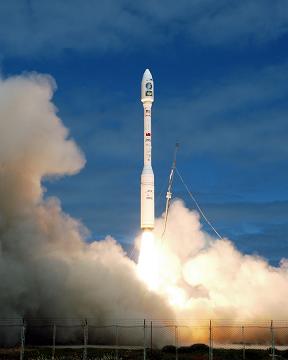
The previous spacecraft failed to reach orbit on February 24, 2009, after being launched on top of a Taurus XL launch vehicle from Vandenberg Air Force Base in California.


The OCO spacecraft will make global CO2 measurements from space, quite useful as scientists are trying to understand the global carbon cycle in order to be able to make predictions of future atmospheric CO2 increases.


NASA awarded the launch services contract to Orbital Sciences Corp. of Dulles, Virginia. OCO-2 will be launched by a Taurus XL 3110 launch vehicle from Vandenberg Air Force Base.


We quote from the NASA press release:

“OCO-2 is a NASA’s first mission dedicated to studying atmospheric carbon dioxide. Carbon dioxide is the leading human-produced greenhouse gas driving changes in the Earth’s climate. OCO-2 will provide the first complete picture of human and natural carbon dioxide sources and sinks, the places where the gas is pulled out of the atmosphere and stored.”


You can find more information about the Orbiting Carbon Observatory on NASA’s website.


  • Digg
  • del.icio.us
  • Facebook
  • Mixx
  • Google
  • Slashdot
  • Reddit
  • Live
  • TwitThis
  • ResearchGate


Credits: Orbital


The Orbiting Carbon Observatory (OCO) failed to reach orbit on February 24, 2009. OCO launched aboard a Taurus XL vehicle from Vandenberg Air Force Base in California.


OCO was to provide global CO2 measurements from space. The data collected during the mission would have helped scientists understand the global carbon cycle. This understanding is essential to improve the predictions of future atmospheric CO2 increases and its impact on the climate.


NASA appointed an investigation board on March 3, 2009. The members of the Mishap Board for the OCO Investigation are: Rick Obenschain, deputy director at NASA’s Goddard Space Flight Center in Greenbelt, Md., head of the investigation board, Jose Caraballo, safety manager at NASA’s Langley Research Center in Hampton, Va., Patricia Jones, acting chief of the Human Systems Integration Division in the Exploration Technology Directorate at NASA’s Ames Research Center at Moffett Field, Calif., Richard Lynch, Aerospace Systems Engineering, Goddard Space Flight Center, Dave Sollberger, deputy chief engineer of the NASA Launch Services Program at NASA’s Kennedy Space Center in Florida.


The official report of the board contains restricted information, so there is a summary of the report available to the public. The summary contains findings and recommendations regarding the OCO mission failure.


Quote from NASA press release:
“The board identified four potential causes that could have resulted in the fairing not separating:
* A failure of the frangible joint subsystem. A frangible joint is an explosive device that provides instantaneous separation of flight vehicle structures while maintaining confinement of explosive debris.
* A failure in the electrical subsystem that prevented sufficient electrical current to initiate the required ordnance devices.
* A failure in the pneumatic system, which supplies pressure to thrusters which separate the fairing.
* A cord snagged on a frangible joint side rail nut plate”.


The scientific community is also making a strong case for reproducing the OCO mission as soon as possible:
“I think a strong case can be made that the [Orbiting Carbon Observatory] should be reproduced as soon as possible. Here we are, on the verge of new international agreements, without thinking about how to monitor them. We are neglecting climate as an element of national security. We’re not getting the information we need. Where are [climate] changes happening, and where are they going to happen?”
-Ralph Cicerone, President of the National Academy of Sciences
Speaking to Congress, 4 March 2009

 

  • Digg
  • del.icio.us
  • Facebook
  • Mixx
  • Google
  • Slashdot
  • Reddit
  • Live
  • TwitThis
  • ResearchGate


Credits: NASA


Last week we presented GOSAT a.k.a. Ibuki, a mission that has as its objective the mapping of carbon dioxide and methane in the Earth’s atmosphere. A similar mission is getting ready to launch on the other side of the Pacific: the Orbiting Carbon Observatory (OCO). OCO is a NASA Earth System Science Pathfinder (ESSP) Program mission.


The mission team includes the Orbital Sciences Corporation, the Jet Propulsion Laboratory, and Hamilton Sundstrand Sensor Systems.


The atmospheric carbon dioxide (CO2) is an important greenhouse gas. CO2 absorbs and traps infrared radiation emitted by the Earth’s surface, preventing it from escaping to space. OCO will provide global CO2 measurements from space. The data collected during the mission will help scientists understand the global carbon cycle. This understanding is essential to improve the predictions of future atmospheric CO2 increases and its impact on the climate.


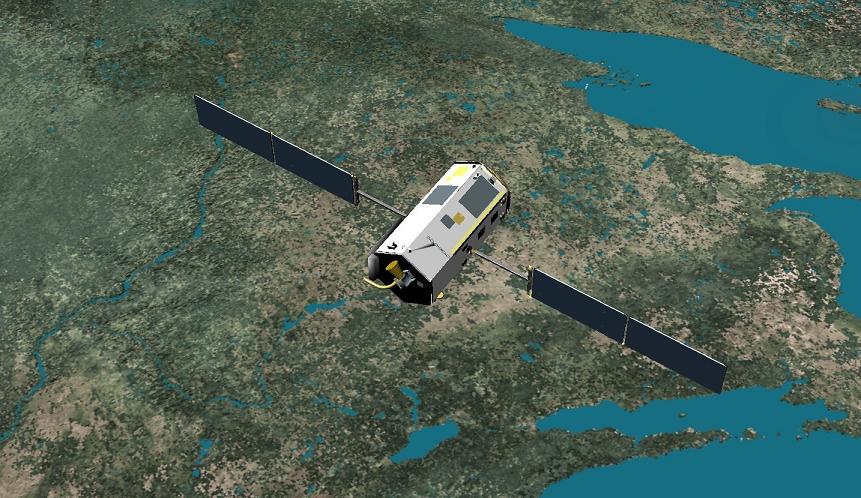
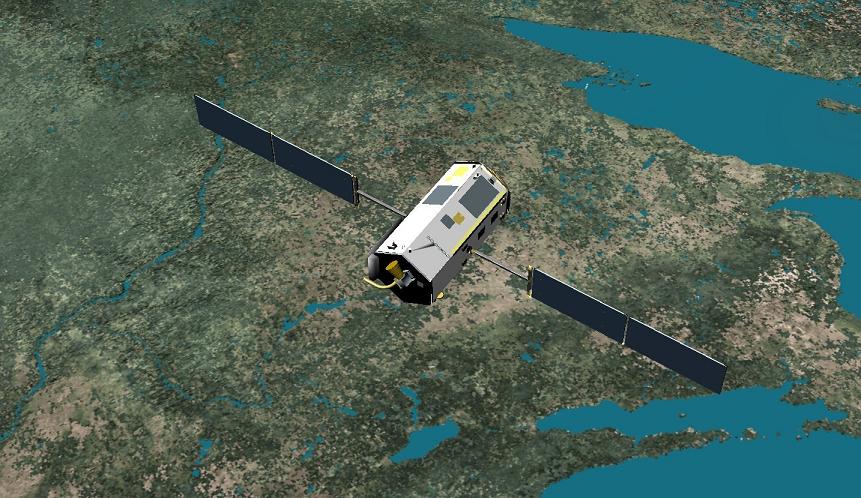
The OCO has a mass of 407 kg. The two GaAs solar arrays will provide 324 W orbit average for the scientific payload onboard. The satellite will use hydrazine thrusters for stabilization while on orbit. The estimated life span for the mission is 24 months.


The scientific payload includes three spectrometers. The spectrometers can detect what gases are in the Earth’s atmosphere and determine their amounts. The measurements will translate into monthly estimates of atmospheric CO2 over 621-square-mile regions of the Earth’s surface. From its sun-synchronous orbit, OCO will map the globe once every sixteen days. These maps will help locate CO2 sources and sinks.


Credits: NASA / Orbital


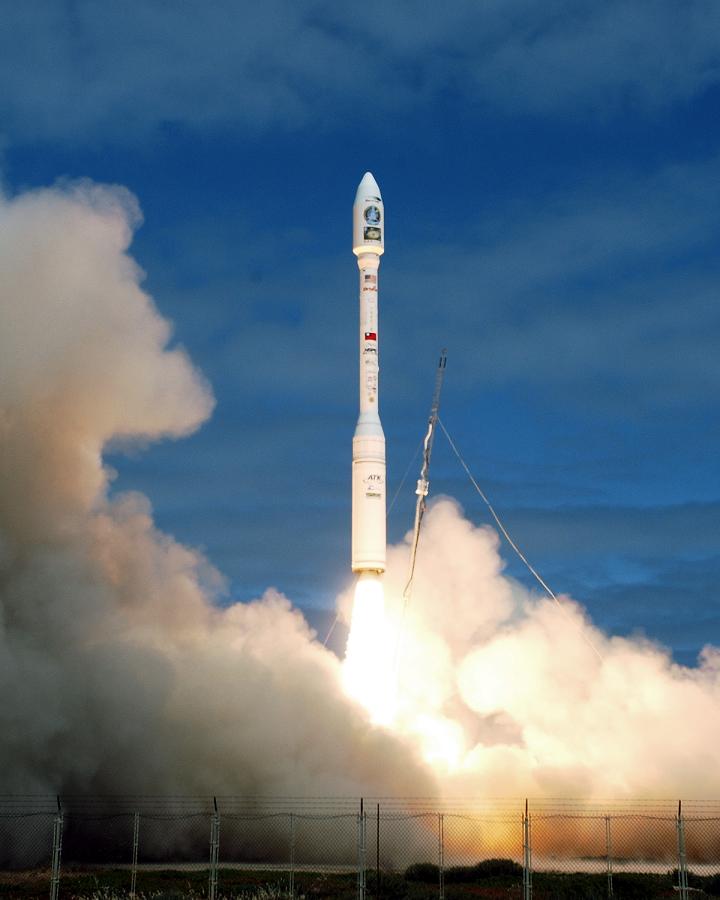
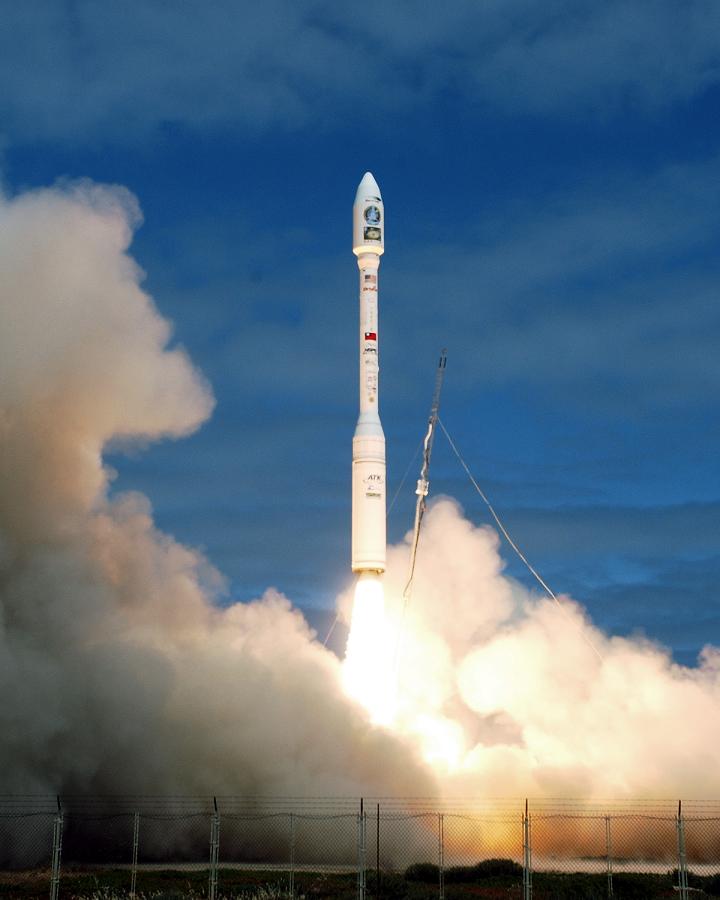
OCO will be placed on orbit by a Taurus XL launch vehicle. Taurus XL is a solid fuel launch vehicle built by the Orbital Sciences Corporation. According to the Taurus fact sheet, it provides launch capability for satellites weighing up to 1,590 kg. The range of launch missions supported by Taurus include low inclination low Earth orbit (LEO), polar LEO, sun-synchronous LEO, geo-transfer orbit, and interplanetary trajectory.


Depending on the configuration, Taurus can have a mass from 69,000 to 77,000 kg and can have a length from 27 to 32 m.


The mission launch is scheduled for early 2009. The Taurus XL launch vehicle will lift off from Vandenberg Air Force Base, California.


  • Digg
  • del.icio.us
  • Facebook
  • Mixx
  • Google
  • Slashdot
  • Reddit
  • Live
  • TwitThis
  • ResearchGate