


 |
| Credits: ESA |
The European presence in space has become more prominent over the years. The development of the Columbus Laboratory and the introduction of the Automated Transport Vehicle (ATV) are two major milestones that have opened a new era for Europe’s presence in space.
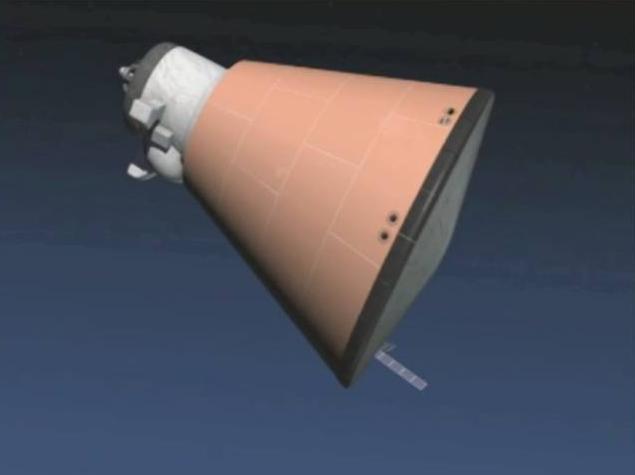
Europe now aspires to consolidate its independence with the Large Cargo Return (LCR) and the Crew Transport Vehicle (CTV).
The LCR and the CTV are the new versions of the ATV that are now being considered by ESA’s Human Spaceflight Directorate. These versions of the ATV reuse the service module of the ATV configuration. A capsule with re-entry capability will replace the integrated cargo carrier. In the first phase, the capsule will bring cargo from the ISS down to Earth. The ultimate goal is to be able to carry a full crew up to the ISS and bring the crew back to Earth.
 |
| Credits: ESA |
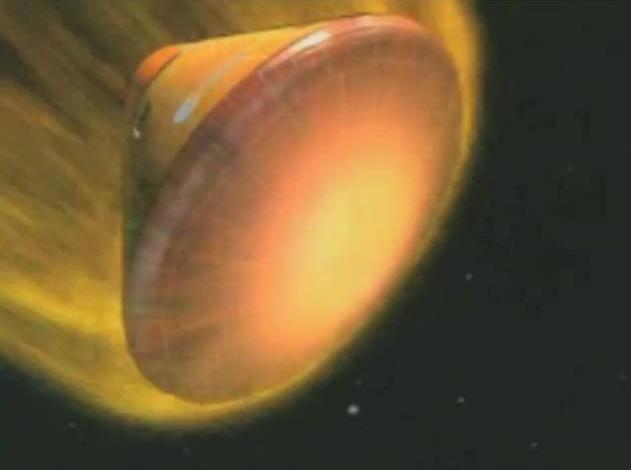
Atmospheric re-entry is not a new challenge for ESA engineers.
Past programs – like the Atmospheric Re-entry Demonstrator – and future programs – like the Intermediate Experimental Vehicle (IXV) – will help validate models used for the simulation of the re-entry phase and also provide a solid base in designing materials for the thermal protection system.
However, one challenge that needs to be addressed is the ejection system for the CTV/Ariane V configuration. The safety of the crew has to be ensured in the case of an anomaly on the launch pad or during the ascent phase of the flight. ESA will have to develop new technologies to satisfy this crucial requirement.
 |
| Credits: ESA |
ESA has already proposed the LCR and the CTV versions of the ATV as the next step in the evolution of the ATV. However, the decision to go forward lies with the Council of the European Space Ministers. If ESA proposals are approved, the first flight of the LCR is expected in 2015, and the CTV could be docking to the ISS by 2020.
Check out ESA’s podcast about the new proposed programs that are based on the ATV.


 Subscribe to blog posts using RSS












