OrbitalHub

The place where space exploration, science, and engineering meet

Domain is for sale. $50,000,000.00 USD. Direct any inquiries to contact@orbitalhub.com.

January 27, 2009

GOSAT a.k.a. IBUKI Launched!

Posted by


Credits: JAXA


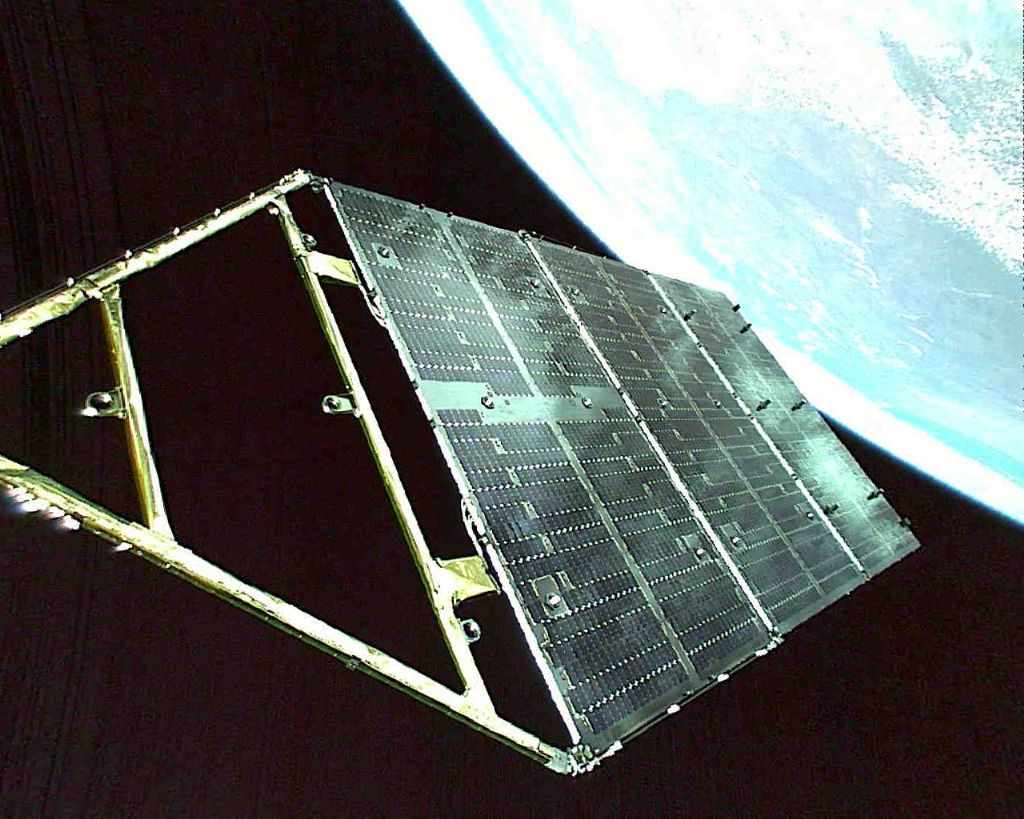
After a launch postponement due to a bad weather forecast, IBUKI was finally launched on January 23, 2009.


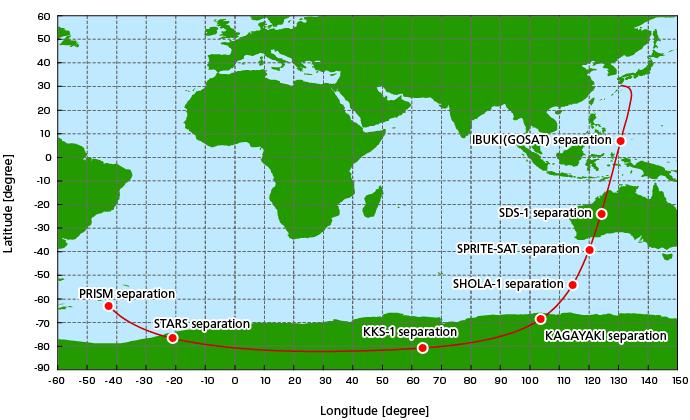
IBUKI was launched aboard H-IIA Launch Vehicle No. 15 from the Tanegashima Space Center. Sixteen minutes after liftoff, the separation of IBUKI was confirmed. The satellite was injected into the scheduled orbit: 684.8 km x 667.4 km, with an orbit inclination of 98 degrees.


IBUKI was not the only satellite launched by flight 15. The payload included several piggyback payloads. It is common practice to include small satellites in the payload that are made by private companies or universities, in the case of an excessive launch capability.


Seven micro-satellites, six selected through public tender and one JAXA satellite, were launched by the H-IIA launch vehicle with IBUKI: KAGAYAKI / SORUN CORPORATION (debris detection and Aurora electric current observation mission), STARS / Kagawa University (tether space robot demonstration), KKS-1 / Tokyo Metropolitan College of Industrial Technology (demonstration of the micro cluster and three axis attitude control functions), PRISM / The University of Tokyo (earth image acquisition by using an expandable refracting telescope), SOHLA-1 / ASTRO TECHNOLOGY SOHLA (measurements of thunder and lightning), SPRITE-SAT / Tohoku University (observations of the sprite phenomenon and gamma radiation of the Earth’s origin), and Small Demonstration Satellite-1 (SDS-1) / JAXA (on-orbit verification of the space wire demonstration).
 

Credits: JAXA


For more details on the additional payloads of H-IIA F15, you can check out the piggyback payload web page on the JAXA web site. Some of the links on the page require knowledge of Japanese or hands-on experience with the Google translation tool.


IBUKI will undergo a check of the onboard equipment function for about three months before becoming operational.


  • Facebook
  • Google
  • Slashdot
  • Reddit
  • Live
  • TwitThis
January 27, 2009

Apollo1 Fire

Posted by


On January 27, 1967, during a test and training exercise at Launch Complex 34, Cape Canaveral, the command module of the Apollo/Saturn 204 mission was destroyed by fire.

The crew training at that time was composed of the astronauts selected for the first manned Apollo Program mission: Command Pilot Virgil I. Gus Grissom, Senior Pilot Ed White, and Pilot Roger B. Chaffee. All three astronauts died in the fire.


  • Facebook
  • Google
  • Slashdot
  • Reddit
  • Live
  • TwitThis


Credits: CNES


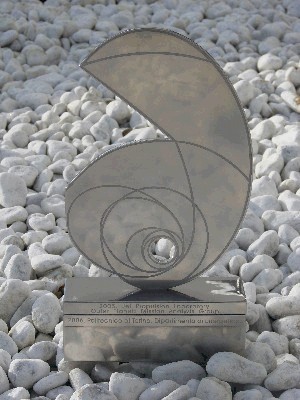
In 2005, ESA’s Advanced Concepts Team held its first Global Trajectory Optimization Competition (GTOC). The purpose of the competition is to stimulate research of techniques for finding the optimal trajectory for different space missions.


What is interesting about this competition is how it has been taken up by the community after its first edition. The winners of the competition become the hosts for the next edition.


The first edition of the competition was won by the Outer Planets Mission Analysis Group of JPL. The second edition was won by the Department of Energetic in the Polytechnic of Turin, and the third edition was won by CNES (Centre National d’Etudes Spatiales).


CNES has announced the 4th Edition of the GTOC. We quote this year’s announcers of the competition, Regis Bertrand, Richard Epenoy, and Benoit Meyssignac:


“Mission designers generally solve trajectory optimisation problems by means of local optimisation methods together with their own experience of the problem. Even if this way is known to provide good results, it never guarantees to yield the global optimum. On the other hand, global optimisation techniques can offer significant assistance in finding an acceptable solution to a given problem, even though convergence to the global optimum is still not guaranteed. By focusing on a problem with a very large number of locally optimal solutions, the Global Trajectory Optimisation Competition promotes the development of methods that most thoroughly and most quickly search through a large and unconventional design space for optima.”


The deadline for registration is February 27, 2009. On March 2, 2009, the competition problem will be disclosed, and March 30, 2009, is the deadline for return of solutions. In September 2009, during a one-day workshop held in Toulouse, France, the teams selected will present their methods and solutions.


  • Facebook
  • Google
  • Slashdot
  • Reddit
  • Live
  • TwitThis
January 26, 2009

A typical ATV mission

Posted by


The typical ATV mission starts in French Guiana, at the Kourou launch site. An Ariane 5 rocket deploys the ATV spacecraft on a circular Low Earth Orbit (LEO) at an altitude of 260 km. ATV then activates its navigation systems and fires its thrusters to reach the transfer orbit to the ISS.

After two or three days, and raising its orbit to 400 km, ATV will be in sight of ISS. It will start the approaching phase of the mission from about 30 km behind and 5 km below the station. Even if the approach and the docking procedures are fully automatic, the flight controllers can at any time call on the spacecraft and back away from the station. The ISS crew can also reject the spacecraft in case any anomalies are noticed.

Once the spacecraft is safely docked to the ISS, the station\’s crew can access the pressurized cargo section and remove the payload. After the payload is removed, the crew fills the cargo section with used hardware and waste materials. At intervals of 10 to 14 days, the main thrusters of the ATV will be used to boost the station\’s altitude. At the end of the mission, the ATV separates from the ISS, and performs a controlled and safe destructive re-entry somewhere above the Pacific Ocean.

Read more on this…


  • Facebook
  • Google
  • Slashdot
  • Reddit
  • Live
  • TwitThis
January 24, 2009

Carnival of Space #87

Posted by


Credits: NASA


Carnival of Space #87 is hosted at The Martian Chronicles by Ryan Anderson.


This week, you can read about methane on Mars, NASA’s lunar rover, the ten space trends for 2009, building lunar outposts, space solar power, and much more.


OrbitalHub presents the Soyuz 4 and 5 missions. Soyuz 4 and 5 successfully carried out the first docking and crew transfer between two spacecraft on January 16, 1969.


  • Facebook
  • Google
  • Slashdot
  • Reddit
  • Live
  • TwitThis
January 17, 2009

Soyuz 4/5 Made History 40 Years Ago Today

Posted by


Credits: NASA


Forty years ago, on January 16, 1969, two Russian spacecraft (Soyuz 4 and Soyuz 5) carried out the first docking between two manned spacecraft and transfer of crew between the craft.


The Soyuz 4/5 mission was a critical milestone for the future of manned space missions, the rendezvous and docking of manned spacecraft being essential for the development of space stations.


Soyuz 4 was launched on January 14, 1969, with cosmonaut Vladimir Shatalov on board. Soyuz 5 was launched one day later. Soyuz 5 had three cosmonauts on board: Boris Volynov, Alexei Yeliseyev, and Yevgeny Khrunov. During the mission, Soyuz 5 acted as the passive ship, while Soyuz 4 was the active chaser craft.


The two spacecraft docked at 0820 UT over the Soviet territory. The docking mechanism did not connect the pressurized modules of the Soyuz spacecraft and two of the cosmonauts on board Soyuz 5, Yevgeny Khrunov and Alexei Yeliseyev, performed EVAs in order to transfer to Soyuz 4.


Credits: NASA/R.F.Gibbons


Soyuz 4 and 5 undocked after three hours and thirty-five minutes.


Soyuz 4 fired its retro-rockets on January 17 and landed somewhere near Karaganda, in Kazakhstan.


Soyuz 5 had an eventful landing. After the retro-fire, the instrument module failed to separate from the descent module, and the landing could have been catastrophic due to the fact that the heat shield was not oriented properly.


However, the re-entry heat caused the propellant tanks in the instrument module to explode and the two modules eventually separated. The parachute had problems deploying properly and a failure of the soft-landing rockets occurred, so the landing was much harder than usual. Apparently, the landing shock was so great that Boris Volynov was thrown across the cabin and broke some of his front teeth.


Volynov landed far off course, in the Ural Mountains near Orenburg, in Russia. The event was kept secret and it eventually came to light in 1997, when an official history book mentioned the incident.


Forty years later, the Soyuz spacecraft is still the workhorse of the Russian space program, and continues to this day to serve as a transfer vehicle to and from the International Space Station (ISS), performing rendezvous and docking maneuvers on each mission.


  • Facebook
  • Google
  • Slashdot
  • Reddit
  • Live
  • TwitThis